
T: +86-189-2891-8174
E: wechupack@yeah.net
E: wechupack@yeah.net
104 The Second Building, No.43 Haichong Road, Shiqi Town,Panyu District, Guangzhou City, China


Views: 0 Author: Site Editor Publish Time: 2026-07-21 Origin: Site


Packaging failures cost manufacturing operations millions of dollars annually. Leaks, spoilage, recalls, and compromised tamper evidence quickly destroy product integrity and brand trust. Buyers often view equipment selection as a simple preference. In reality, choosing the right machinery presents a rigid technical requirement. You must align your choice strictly with your container design, material chemistry, and automation goals. Making the wrong choice leads to endless production bottlenecks and unsafe products. We will break down this complex decision for you. You will learn the exact mechanical differences between non-contact electromagnetic systems and direct-contact thermal conduction. We will explore material compatibilities, production throughput scaling, and essential safety metrics. This guide provides a clear, vendor-neutral framework. It will help you evaluate your technical options effectively and protect your production line.
Induction sealing is mandatory for capped bottles and jars requiring hermetic, tamper-evident foil liners.
Direct heat sealing is the standard for flexible packaging (bags, pouches) and capless rigid trays.
Line speed scalability heavily favors induction for continuous-motion bottling, while heat sealing requires calculated dwell times.
Selecting the right equipment requires aligning consumable costs (liners vs. film) with initial capital expenditure (CapEx).
The induction process relies on advanced electromagnetic physics. It offers an incredibly efficient way to close containers. An electromagnetic field generates eddy currents. These currents heat an aluminum foil heat sealing machine liner inside a pre-torqued cap. The process begins when a container passes beneath an induction coil. The coil emits an oscillating electromagnetic field. This field easily penetrates the plastic cap. It interacts directly with the conductive aluminum foil layer inside the liner.
The foil heats up rapidly. This targeted thermal energy melts a delicate layer of wax. The wax absorbs into a pulp backing board. This action releases the foil from the cap. Simultaneously, a polymer coating on the bottom of the foil melts. This molten polymer bonds directly to the container lip. As it cools, it creates a hermetic seal.
This method provides a massive non-contact advantage. The seal forms entirely through the closed cap. You never expose the open product to the factory environment during the sealing phase. This protects your product from external contamination. It also prevents spills on the machinery.
Maintain consistent cap torque. The cap provides the necessary downward pressure for the polymer to bond.
Calibrate the distance between the induction coil and the cap accurately.
Ensure the container lip remains completely dry and free of product residue before capping.
Direct thermal sealing operates on fundamentally different physical principles. It relies on the direct transfer of thermal energy. Heated metallic platens, jaws, or rotary wheels physically touch the packaging material. This direct contact transfers heat into the polymer layers.
Engineers refer to the fundamental requirements here as the "3 Ts". These are Temperature, Time, and Pressure. You must calibrate all three perfectly.
Temperature: The heating elements must reach the exact melting point of the specific thermoplastic material.
Time (Dwell): The machine must hold the materials together long enough for the heat to penetrate the layers.
Pressure: The jaws must compress the melted layers evenly to fuse them into a single hermetic barrier.
If you fail to balance these three variables, the closure will fail. Too much heat scorches the film. Too little pressure creates micro-leaks. Insufficient dwell time prevents a complete fusion of the polymers.
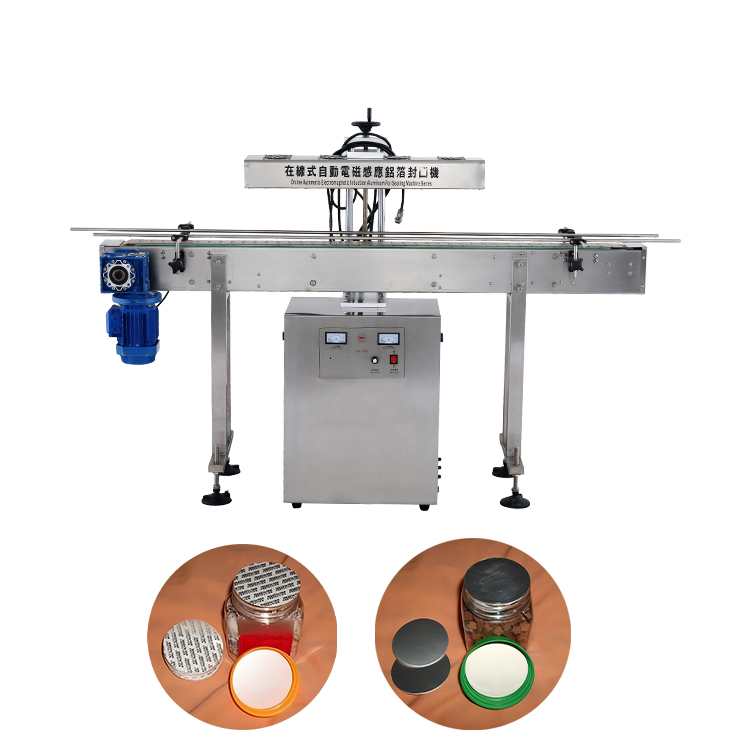
You must evaluate your packaging format carefully. We highly recommend an induction sealer machine for specific rigid applications. It serves as the industry standard for bottles, jars, and jugs. These containers must utilize continuous thread or lug caps. The cap itself acts as half of the sealing mechanism. It applies the critical pressure needed while the foil heats.
Product profiles heavily influence this choice. Liquids like hot sauces, beverages, and industrial chemicals require this technology. Powders and nutraceuticals also benefit greatly. Pharmaceutical companies mandate this method for strict tamper evidence. When consumers peel back the foil, they know the product remains safe.
Material nuances dictate success here. The process works flawlessly for standard thermoplastics like PET, HDPE, and PP. The polymer coating on the foil liner must match the container material. You must match a PET liner to a PET bottle. Glass containers present a unique challenge. Glass lacks a polymer matrix to melt. Therefore, glass containers require specialized, pre-treated liners. These specific liners use unique chemical coatings to achieve reliable adhesion to the glass rim.
You should specify direct thermal methods for entirely different packaging formats. This technology dominates flexible packaging. It works perfectly for pouches, poly bags, and blister packs. It also serves as the primary method for pre-formed rigid trays.
Product profiles suited for this method include solid foods, hardware, and medical devices. Ready-to-eat meals in plastic trays rely heavily on this process.
Material nuances favor this method for direct film-to-container applications. You use this when no secondary cap is present. The heated platen presses a flexible film directly onto the flange of a rigid tray. The two materials fuse permanently.
Parameter | Induction Process | Direct Thermal Process |
|---|---|---|
Primary Container Style | Capped bottles, threaded jars, jugs | Flexible pouches, blister packs, capless trays |
Sealing Mechanism | Non-contact electromagnetic field | Direct physical contact via heated jaws |
Required Pressure Source | The pre-applied threaded cap | Mechanical force from the machine platens |
Tamper Evidence | Integrated into the peelable foil liner | Destructive entry of the bonded film/pouch |
Line speed requirements dictate machine selection on automated floors. Induction technology holds significant advantages here. It operates continuously inline. The container never stops moving. Bottles travel on a standard conveyor. They pass under the sealing head seamlessly. This scales perfectly with existing conveyor speeds. High-speed bottling lines often process hundreds of bottles per minute using this method.
Thermal sealing presents harsher realities for throughput. The process remains strictly dwell-time dependent. The materials need physical time to melt and fuse. High-speed automated lines require complex indexing systems to handle this. You might need walking-beam conveyors or rotary heat-seal heads. These systems physically track the moving package. They apply heat while matching the package velocity. This mechanical complexity increases integration difficulty.
Failing to match the conveyor speed to the induction generator power, leading to weak bonds.
Installing thermal sealers on continuous-motion conveyors without proper indexing mechanisms.
Ignoring ambient plant temperature fluctuations, which can alter the required dwell time for thermal jaws.
Every industrial process carries inherent risks. You must mitigate these through smart engineering. Induction systems present specific risks during line stoppages. If a conveyor halts, a bottle might stall directly beneath the active electromagnetic coil. The continuous energy will scorch the liner. It can even melt the plastic cap or start a fire. You must integrate stall-sensors. You also need automatic rejection systems. When the line stops, the power must cut off instantly. Despite this, the process remains much safer for operators. The equipment features no exposed hot surfaces.
Thermal sealing presents direct burn hazards. Manual or semi-automated setups expose operators to extremely hot platens. Plant managers must install light curtains and physical guards. Furthermore, these machines require extensive maintenance. You must conduct frequent replacement of consumable wear parts. Teflon tape degrades quickly. Heating elements burn out and require replacement. Thermocouples drift and need regular recalibration.
You should never purchase equipment without a comprehensive sample run. A credible sealing machine manufacturer will offer application testing labs. You must send them your exact containers, caps, and product samples.
They will run these materials through their systems. They must validate specific metrics. You need documented proof of peel strength. You also require certified leak rates. If the bond is too weak, the product leaks. If the bond is too strong, the consumer cannot open it. A professional manufacturer balances this perfectly.
Industrial machinery must meet rigid regulatory standards. You must ensure the equipment carries the correct certifications. In Europe, look for CE markings. If you operate in the pharmaceutical space, the machinery must comply with cGMP standards.
Food and beverage applications require specific environmental protections. You need FDA-compliant washdown ratings. Look for IP65 or IP69K ratings. These ratings ensure the machine can withstand high-pressure, high-temperature chemical cleaning. A reliable manufacturer provides a full documentation package. This includes Installation Qualification (IQ), Operational Qualification (OQ), and Performance Qualification (PQ) protocols.
Machine downtime destroys profitability. You must assess the post-sale support infrastructure of your chosen vendor. Check the availability of rapid-ship replacement parts. You need access to technical support teams.
Modern equipment should feature clear diagnostic interfaces. A touch-screen HMI (Human Machine Interface) must display exact error codes. It should pinpoint faults immediately. Excellent manufacturers also offer integration assistance. They will help you mount the equipment over your existing conveyors seamlessly.
Making the final choice between an induction sealer machine vs heat sealing machine rests entirely on your primary packaging structure. If you use a capped bottle or jar, you must use an electromagnetic process. If you use flexible pouches or capless trays, direct thermal contact remains your only option. You cannot force one technology into the other category.
To move forward, we recommend auditing your current line speeds. You must calculate your acceptable reject rates. Gather samples of your fully assembled packaging. Finally, request a pilot test with a shortlist of reputable manufacturers. This data-driven approach ensures a secure, leak-proof future for your production line.
A: Yes. However, it requires highly specific liners. Glass lacks a natural polymer matrix. You must use liners treated with a customized polymer coating. This special coating bonds effectively with the glass rim. Standard plastic liners will fail to adhere to glass surfaces.
A: Failures usually occur due to insufficient cap torque. The cap must provide downward pressure. Incorrect power settings also cause issues, leading to under-heating or scorching. Finally, liquid contamination on the bottle lip prevents the polymer from bonding securely.
A: No. Once you apply a cap, direct heating elements cannot reach the lip of the bottle. The physical jaws would melt the exterior cap before sealing the inner liner. You must use electromagnetic technology for closed-cap applications.


