
T: +86-189-2891-8174
E: wechupack@yeah.net
E: wechupack@yeah.net
104 The Second Building, No.43 Haichong Road, Shiqi Town,Panyu District, Guangzhou City, China


Views: 0 Author: Site Editor Publish Time: 2026-07-07 Origin: Site


Improper sealing creates significant operational stakes for modern manufacturers. Compromised shelf life directly leads to devastating product recalls. This causes severe brand damage and massive lost revenue. Modern food production demands much more than basic packaging capabilities. Facilities must evolve toward high-compliance, automated sealing solutions. This shift represents a necessary evolution for scaling output safely. Selecting the right aluminum foil sealing machine for food packaging requires much deeper analysis. You cannot rely solely on basic speed metrics anymore. We must evaluate critical seal integrity alongside equipment integration. Readers will discover how to assess precise thermal mechanics effectively. You will also learn about strict hygienic compliance and quality assurance. This comprehensive guide helps you navigate critical equipment choices confidently.
Transitioning to an automatic aluminum foil container sealing machine reduces defect rates and labor costs but requires strict alignment with your existing production line capacity.
Advanced quality assurance features, such as infrared thermal imaging, are becoming critical for verifiable airtight food container sealing.
Evaluating a food packaging sealing machine demands a rigid assessment of GMP/CE compliance, maintenance downtime, and tooling changeover times.
Total Cost of Ownership (TCO) relies heavily on the machine's ability to integrate seamlessly with upstream filling equipment.
Hidden costs quickly multiply when inconsistent seals plague your production line. Spoilage ruins entire batches before they ever reach the consumer. Oxidation degrades complex flavor profiles and essential nutritional value rapidly. Transit leakage damages surrounding inventory and severely strains distributor relationships. Manual quality control also introduces major operational bottlenecks. Human inspectors simply cannot keep pace with high-speed packaging lines. Eye fatigue inevitably leads to missed micro-leaks and delayed shipments. You lose money every time an operator pauses the line manually.
A successful implementation completely eliminates these hidden profit drains. You achieve verifiable zero-defect packaging across every single production run. The equipment maintains a sustained throughput of specific pieces per minute. It never sacrifices barrier quality for operating speed. It also delivers verifiable barrier protection for every individual container. We expect seamless daily operation without constant operator intervention. True success means your reject bin remains completely empty at shift end.
Calculating your payback period requires analyzing multiple distinct factors. First, quantify the immediate reduction in manual labor hours. Automated systems free up workers for higher-value facility tasks. Next, track the minimized product waste over a typical operating month. Discarded materials represent direct, unrecoverable financial losses. Finally, factor in the increased shelf-life guarantees. Extended preservation allows you to reach broader geographical markets safely. This territorial expansion directly boosts your overall revenue potential.
Matching equipment to your operational scale prevents costly bottlenecks. Choosing the wrong category severely limits your future growth potential.
These units work best for low-volume production environments. They perfectly suit pilot runs and small-batch artisanal foods. Startup brands often utilize them to test new product lines safely. Operators manually load containers into the holding fixture. The machine then applies heat and pressure based on preset timers.
However, they carry notable operational limitations. Consistency remains highly operator-dependent throughout a long, busy shift. Operator fatigue leads to uneven cycle times and inconsistent pressure application. Furthermore, this category entirely lacks long-term scalability. You cannot upgrade them easily when market demand suddenly spikes.
High-volume facilities require uninterrupted throughput strictly. They rely on these automated systems for non-stop continuous operation. Large dairy processors and ready-meal manufacturers depend on them daily.
Their core advantages center around fully mechanized control. Precision speed regulators maintain exact pacing without fluctuation. Standardized pressure and heat application eliminate dangerous structural variability. Crucially, they require minimal human touchpoints during active operation. This drastic reduction in handling heavily lowers cross-contamination risks.
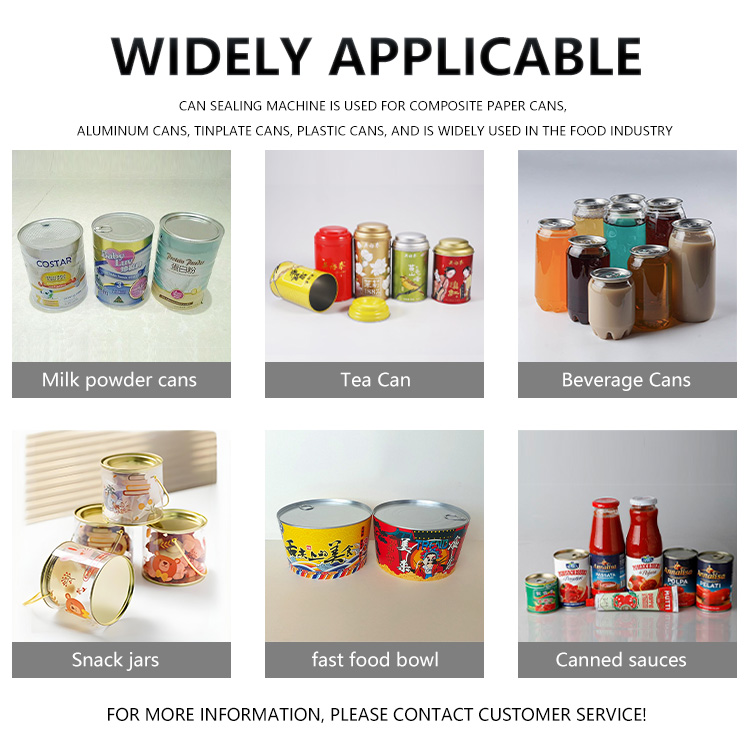
Rigid hygiene-critical applications demand highly specialized mechanics. Beverages, canned goods, and dry powders cannot use flexible tray sealers. Instead, these machines use specialized seaming chucks and heavy-duty rollers. They focus specifically on the mechanics required for rigid applications. They form a hermetic double seam to guarantee structural integrity. They handle high-pressure environments and carbonated contents effortlessly. Standard foil heat sealers cannot manage internal pressure buildup.
You must evaluate specific mechanical tolerances closely. This strict evaluation guarantees reliable airtight food container sealing. Ignoring these criteria compromises your entire production line.
Thermal controls completely dictate the success of every individual seal. You must evaluate the precision of the built-in heating elements. High precision avoids foil scorching entirely. Scorched foil weakens the barrier and contaminates the food surface immediately. It also prevents invisible micro-leaks from forming along the rim. Pressure must distribute perfectly evenly across the entire container lip. Uneven pressure leaves microscopic gaps for oxygen entry. Dwell time determines exactly how long the heat applies. Even a half-second variance ruins the protective barrier completely. We recommend purchasing controllers offering strict decimal-level temperature adjustments.
Modern production demands proactive, built-in inspection mechanisms. Relying on basic visual checks is no longer commercially viable. Operators simply miss microscopic flaws at high operational speeds. Defective products then enter the retail supply chain unnoticed.
Advanced systems now incorporate infrared thermal imaging inspection. We advise evaluating systems offering automatic fault identification. Thermal sensors spot temperature anomalies instantly across the seal margin. The system automatically identifies and ejects faulty seals in real-time. It accomplishes this rejection without slowing production down. This advanced technology guarantees verifiable compliance for every batch.
Production lines rarely run just one product indefinitely. Facilities must switch between different SKUs frequently to meet demand. Assess how easily the machine adapts to different packaging specifications. It must handle different foil diameters smoothly. It should accommodate various container profiles quickly without complex adjustments.
Beware of vendors who obscure routine changeover details. Actual downtime significantly impacts your daily production yield. If a tool change takes two hours, you lose massive profitability. Demand clear demonstrations of tool-less or quick-release changeover systems before buying.
A standalone machine provides limited value without proper operational context. True efficiency requires holistic, facility-wide line integration planning.
Upstream integration completely dictates your overall operational flow. Ensure the sealing equipment synchronizes perfectly. It must link flawlessly with existing filling modules upstream. This integration creates a highly efficient turnkey solution. Electronic handshakes between machines prevent sudden jamming. Built-in sensors communicate line speeds to avoid destructive operational bottlenecks.
Transparent utility assessment prevents costly installation delays. Review the physical footprint carefully against your strict floor plan. Check the compressed air requirements measured in precise MPa. Verify the exact power prerequisites listed in KW. Insufficient utilities cause frequent operational failures and unpredictable machine behavior. Always leave a 20 percent utility buffer for peak operational loads.
Operator training heavily influences daily equipment usability. Evaluate the Human-Machine Interface carefully during vendor visits. Complex systems without intuitive controls cause severe daily problems. They inevitably lead to frequent operator errors. They also trigger frustrating micro-stoppages throughout the shift. A clear dashboard reduces operator training time immensely. Icon-based menus help overcome language barriers on the busy factory floor.
Food safety relies entirely on uncompromising hygienic engineering principles. Weak engineering invites severe contamination.
Sanitary design is absolutely non-negotiable for food preservation. IP-rated washdown capabilities allow highly aggressive cleaning routines safely. Water and chemical resistance prevent internal mechanical corrosion over time. Food-grade stainless steel construction completely eliminates bacterial harborage points. Smooth, continuous welds prevent microscopic debris accumulation. Avoid machines utilizing exposed threads or flat horizontal surfaces where washdown water pools.
Regulatory alignment protects your business from massive financial penalties. You must verify CE certifications rigorously before committing. Confirm strict GMP compliance through official, verifiable documentation. Check for FDA-approved contact materials across all physical touchpoints. Government auditors inspect these specific certifications during routine facility evaluations.
Modern traceability tools protect your corporate liability effectively. Modern machines now log precise sealing parameters automatically. They record temperature and pressure data continuously for every batch. This creates highly reliable, digital audit trails. You can prove batch compliance easily during strict regulatory inspections. If a recall occurs, precise data isolates the affected batch immediately.
Follow a structured approach to finalize your equipment choice. Finding the right automatic aluminum foil container sealing machine requires systematic diligence.
Define Hard Constraints: Document your exact container types clearly. State your required throughput strictly in pieces per minute. Measure your available facility space accurately. Do not browse models falling outside these non-negotiable operational parameters.
Request Proof of Concept (PoC): Demand rigorous sample runs using your specific containers. Provide your own foil materials for actual testing. Never rely solely on standard vendor demo materials. Real-world testing exposes hidden compatibility issues immediately.
Evaluate After-Sales Support: Assess local parts availability in your specific region. Review the Service Level Agreement for technical support response times. Check the warranty terms transparently for hidden exclusions. Poor support creates devastating operational downtime.
Use the following best-practices checklist during vendor consultations to ensure optimal equipment selection:
Can the system log thermal data for compliance?
What is the guaranteed maximum changeover time?
Are all contact parts made from 304 or 316 stainless steel?
Does the HMI support multiple languages for diverse operators?
Can the sensors handle highly reflective aluminum surfaces?
Feature to Evaluate | Basic Entry Models | Advanced Automated Models |
|---|---|---|
Inspection Method | Manual/Visual Sampling | Infrared Thermal Imaging |
Changeover Time | Greater than 45 Minutes | Less than 15 Minutes |
Data Traceability | None (Paper Logs) | Digital Batch Logging |
Washdown Rating | IP54 (Splash Resistant) | IP65 / IP69K (High Pressure) |
Heat Control Precision | Standard Thermostat | PID Digital Controllers |
Your primary goal remains absolute risk mitigation. A reliable food packaging sealing machine ensures reliable, long-term food safety. Do not prioritize raw throughput speed over critical seal integrity. Sacrificing barrier quality for speed always leads to costly recalls. We must view packaging automation as a strategic protective measure. It safeguards your hard-earned brand reputation.
Start by auditing your current defect rates immediately. Quantify your weekly spoilage and leakage incidents meticulously. Next, document your existing upstream filling capacities thoroughly. Finally, contact an experienced packaging engineer to discuss integration options. Professional guidance ensures your new equipment matches your specific line flawlessly. Take action today to secure your product quality and optimize your operational efficiency.
A: They use real-time temperature mapping to detect invisible micro-leaks. A human eye cannot see microscopic sealing failures. The thermal camera spots uneven heat distribution along the seal margin accurately. It instantly flags the specific defective container. The machine then automatically ejects it before it reaches the end of the line. This prevents compromised food from ever leaving your facility.
A: Yes, modern machines handle various sizes using interchangeable tooling. However, you must account for tooling costs and changeover downtime carefully. Routine changeovers typically require 15 to 45 minutes. The exact time depends entirely on the machine's engineering quality. Quick-release mechanisms significantly reduce this downtime for multi-SKU facilities.
A: Maintenance requires strict daily cleaning to ensure food hygiene. You should perform weekly sensor checks to maintain accuracy. Finally, schedule quarterly wear-parts replacement. This routine includes swapping out heating elements and replacing Teflon belts. Following this schedule prevents unexpected breakdowns and ensures consistent seal quality.
A: Foil thickness directly changes your required settings. A thicker micron profile requires a significantly longer dwell time. It also demands higher induction or heat settings to penetrate the material properly. Thinner foils seal faster but scorch easily if temperatures run too high. You must calibrate heat and pressure specifically for your chosen foil gauge.


