
T: +86-189-2891-8174
E: wechupack@yeah.net
E: wechupack@yeah.net
104 The Second Building, No.43 Haichong Road, Shiqi Town,Panyu District, Guangzhou City, China


Views: 0 Author: Site Editor Publish Time: 2026-07-03 Origin: Site


In high-volume manufacturing, production bottlenecks carry incredibly high stakes. A single failed seal often triggers massive product spoilage. It invites costly regulatory recalls. It severely compromises your product shelf life. You simply cannot afford inconsistent capping results on a fast-paced line. Transitioning from entry-level equipment to a robust water-cooled aluminum foil sealing machine represents a critical operational upgrade. It is much more than a routine hardware purchase. This transition fundamentally changes how your entire packaging line handles intense thermal loads. It secures your yield against environmental variables.
Many buyers face confusing marketing claims when upgrading their facilities. You need clear, data-driven facts to navigate this procurement cycle. This guide strips away the sales fluff entirely. We provide a strict, engineering-led evaluation framework for your equipment procurement. You will discover exactly when liquid cooling becomes necessary. You will learn how to measure operational success accurately, ensuring your final decision directly supports long-term production stability.
Water-cooled induction systems are mandatory for continuous, high-speed lines (typically 100+ bottles/minute) or large-diameter caps where thermal load exceeds ambient dissipation.
The primary differentiator between water and air-cooling is sustained duty cycle and thermal consistency, directly impacting the zero-reject success rate.
Total Cost of Ownership (TCO) for water-cooled units must factor in chiller maintenance, water quality management, and expanded floor footprint.
Procuring a custom sealing machine solution is often necessary for non-standard cap designs or harsh plant environments.
Many packaging managers notice subtle warning signs long before a complete line failure occurs. You might see melted caps piling up in the rejection bin. Foil adhesion suddenly becomes spotty across different batches, causing micro-leaks during transport. You might experience thermal shutdowns halting the equipment during peak summer shifts. These symptoms point to one undeniable reality. Your current operation is dangerously under-specced for its output volume. Relying on inadequate cooling mechanisms inevitably degrades both machine lifespan and product safety.
You cannot define success merely by looking at maximum power ratings on a spec sheet. True operational success requires continuous throughput without unexpected interruption. We measure this metric in Caps Per Minute (CPM) alongside a shrinking defect rate. When production lines move quickly, sealing heads generate massive amounts of electromagnetic energy. This energy creates severe residual heat inside the equipment. If the system cannot dissipate this heat fast enough, the internal components warp, and the magnetic field weakens.
Operating a continuous induction sealing machine demands strict thermal control. Liquid cooling maintains a highly stable electromagnetic field. It actively prevents the induction coil and internal power supply from overheating. A stable operating temperature ensures uniform seal integrity. You need this uniformity across grueling 24/7 production cycles. Without adequate liquid cooling, continuous high-speed operation inevitably leads to hardware degradation and compromised container security.
You must establish hard operational thresholds before buying new equipment. When does an air-cooled aluminum foil sealing machine actually fail to keep up? Industry engineering standards show clear operational limits. Pushing line speeds beyond 100 CPM typically overwhelms air-cooled systems. Large cap diameters also multiply the thermal load exponentially. The induction coil heats up much faster than ambient air can cool it down. Once the coil surpasses its thermal threshold, the foil receives uneven heat, resulting in partial seals.
Heat dissipation methods define these two distinct machine categories. Air-cooled units rely entirely on ambient plant temperatures. This dynamic poses extreme risks in unconditioned facilities. Summer heatwaves easily push your equipment past safe operating limits. Your line slows down to compensate, destroying throughput targets. Conversely, water-cooled systems provide independent thermal regulation. They circulate chilled liquid directly through the internal coil housing. This closed-loop system ignores ambient factory heat entirely, delivering identical performance in winter and summer.
Let us compare the financial and operational trade-offs directly. We must evaluate upfront capital expenditure versus long-term yield consistency to make an informed procurement decision.
System Performance and Requirement Comparison
Operational Parameter | Air-Cooled Systems | Water-Cooled Systems |
|---|---|---|
Line Speed Limit | Typically under 100 CPM | Routinely exceeds 300+ CPM |
Cooling Source | Ambient plant air | Independent closed-loop liquid chiller |
Cap Diameter Profile | Best for standard/small sizes (under 50mm) | Handles wide-mouth and oversized caps easily |
Yield Consistency | Fluctuates based on room temperature | Highly stable across long 24-hour shifts |
Upfront Capital | Lower initial investment | Higher initial investment |
Facility Plumbing | Zero plumbing required | Requires dedicated hoses and coolant management |
Air-cooled systems boast lower upfront costs. They require absolutely zero plumbing infrastructure to operate. However, they suffer from inconsistent yields during long operational shifts. Water-cooled units demand higher initial capital investments. They require dedicated plumbing and structured maintenance routines. Despite these requirements, their superior yield consistency delivers faster financial returns on high-speed packaging lines.
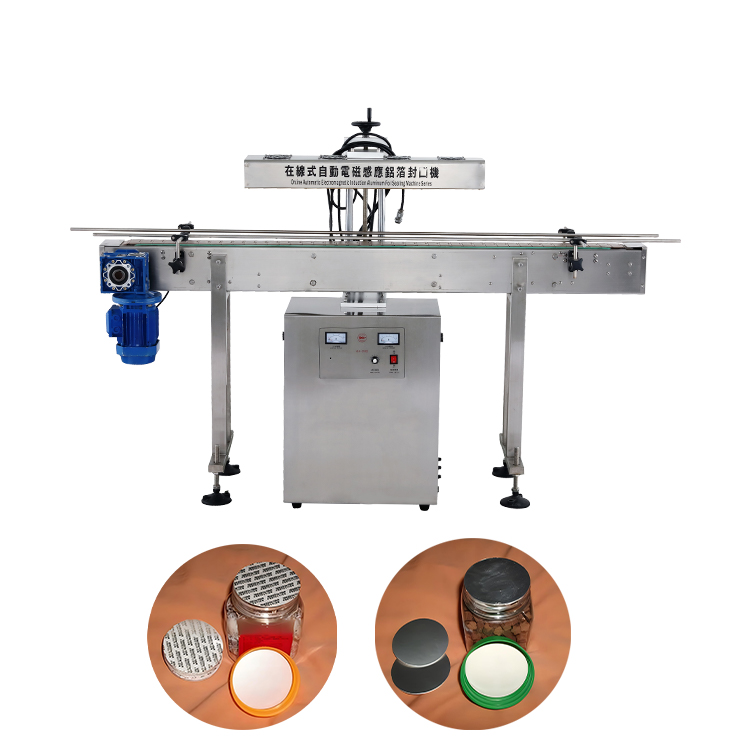
Buyers often fixate heavily on raw kilowatt (kW) ratings. This approach is a common procurement mistake. You must evaluate power output strictly against your specific foil thickness. Cap size matters equally in this calculation. A massive 6kW generator wastes valuable energy if your containers only need 2kW for an optimal seal. Buying the highest number rarely guarantees the best sealing performance. It often just increases your utility bills unnecessarily while risking scorched liners.
Chiller specifications require intense technical scrutiny. The cooling system acts as the lifeblood of your entire equipment setup. Whether you choose an integrated unit or an external standalone chiller, you must evaluate several distinct components rigorously.
Flow Rate Capacity: The pump must move enough liquid per minute to absorb peak thermal loads. Insufficient flow causes localized boiling inside the induction coil.
Temperature Stability: The chiller must hold coolant temperatures within a tight two-degree variance. Wide temperature swings create inconsistent seal bonds across different bottles.
Built-In Alarms: The system must feature automatic shutdown triggers. Flow failure alarms protect the generator from instantly burning out when blockages occur.
Next, consider mandatory compliance and safety standards carefully. Food and pharmaceutical environments demand strict washdown ratings. Look specifically for IP65 or IP67 certifications on the equipment casing. These ratings ensure internal electronic components survive high-pressure cleaning protocols. CE and UL certifications remain non-negotiable for baseline electrical safety. Furthermore, ensure your unit includes robust electromagnetic interference (EMI) shielding. Proper shielding prevents the high-frequency induction generator from disrupting nearby sensitive line sensors.
We must directly address the skeptical view regarding liquid cooling. These systems introduce complex maintenance requirements to your facility. Do not sugarcoat this reality during your planning phase. You need a highly structured plan for ongoing mechanical upkeep to ensure maximum uptime.
First, evaluate your facility footprint constraints. Dedicated floor space is absolutely mandatory for external chiller units. You must safely route coolant hoses across the busy production floor. Hoses pose significant tripping hazards if improperly managed. Overhead routing often solves this issue, but it requires additional installation time and specialized mounting brackets. You must account for these spatial requirements before the equipment arrives.
Maintenance protocols dictate your long-term success. Managing coolant loops requires consistent operator diligence. You must actively prevent mineral scale buildup inside the internal pipes. Algae growth thrives rapidly in neglected water tanks. You need regular chemical treatments to keep the lines completely clear. Operators must monitor pump degradation continuously. A failed pump stops coolant flow instantly. This failure leads to catastrophic coil damage within mere minutes.
Finally, consider operator adoption curves. Line workers require entirely new training regimens. They must learn to monitor digital water temperature gauges accurately. Flow fault indicators demand immediate, decisive attention. Your floor team must understand these warning signals deeply to prevent massive production downtime. Proper training separates a highly efficient line from a constantly failing one.
Standard induction coils often fail to handle irregular packaging designs. Off-the-shelf equipment struggles terribly handling asymmetric bottle necks. Sports caps present uniquely difficult heating challenges because the foil sits deep inside the plastic housing. Multi-layer foil laminates demand highly precise, targeted energy delivery. In these complex scenarios, procuring a custom sealing machine solution becomes absolutely necessary for success. Custom coils direct the electromagnetic field exactly where it needs to go.
Integration capabilities define a successful custom machine build. Your new hardware must communicate seamlessly across existing line PLCs (Programmable Logic Controllers). It should read variable conveyor speeds in real time to adjust power output dynamically. It must sync perfectly alongside downstream rejection systems to kick out unsealed bottles automatically. If the sealer cannot talk to your main line network, it becomes an expensive, isolated bottleneck.
Vendor vetting requires a rigid, logical framework. Never sign a purchase order based on glossy brochures alone. Demand physical testing first. Send your specific containers and foil caps directly to the vendor. Insist they run simulated line speeds matching your exact facility conditions. Review the resulting seals meticulously for uniform adhesion. Cut the sealed bottles open to check for microscopic scorching on the liner edges.
Moving to a robust water-cooled system directly protects your line uptime. It secures product integrity across massive, non-stop production runs. This operational upgrade stops thermal bottlenecks long before they ruin your quarterly manufacturing targets. By prioritizing thermal stability, you eliminate the largest variable in the induction sealing process.
Take these immediate next steps to ensure procurement success:
Compile your exact CPM requirements for peak seasonal production.
Gather physical cap and bottle samples from all active product lines.
Record your facility’s peak summer ambient temperature data.
Map out available floor space for chiller integration and hose routing.
Define the specific PLC communication protocols your line currently uses.
Armed with this precise information, you can initiate vendor RFPs confidently and secure the exact hardware your production lines demand.
A: Maximum line speeds depend heavily on cap diameter and foil material. However, high-performance water-cooled systems routinely exceed 300 to 500 Caps Per Minute (CPM) for standard-sized closures. They sustain these high speeds continuously without overheating, whereas air-cooled units typically plateau around 100 CPM.
A: No. Retrofitting is generally impossible due to severe engineering limitations. The internal induction coils and power supply architectures differ entirely between the two systems. Water-cooled units require specialized hollow copper tubing and waterproof housings. You must upgrade the entire machine to switch cooling methods.
A: Most manufacturers recommend using pure distilled water mixed with industrial glycol. Distilled water prevents mineral scale buildup inside the delicate cooling loops. The glycol additive acts as a biocide, actively preventing algae growth and protecting the internal pump mechanisms from corrosion over time.
A: Larger cap diameters contain more aluminum foil mass. Heating a larger mass requires significantly more electromagnetic energy. This increased energy generation creates substantial residual heat inside the sealing head. Consequently, wide-mouth containers almost always mandate water cooling to prevent equipment failure.


