
T: +86-189-2891-8174
E: wechupack@yeah.net
E: wechupack@yeah.net
104 The Second Building, No.43 Haichong Road, Shiqi Town,Panyu District, Guangzhou City, China


Views: 0 Author: Site Editor Publish Time: 2026-06-10 Origin: Site


Inaccurate filling carries a steep, hidden price tag. Overfilling erodes your profit margins drop by drop through product giveaway. Conversely, underfilling damages your brand reputation. It also triggers harsh regulatory fines. Buyers often underestimate how easily these invisible losses multiply across high-speed production cycles.
You must move past the era of manual calibration. Today's precision relies on a tightly integrated matrix. This matrix combines mechanical tolerances, smart sensors, and software automation. Modern equipment no longer guesses. It measures, verifies, and adjusts volumes in milliseconds.
Evaluating engineers and procurement managers need a transparent, evidence-based framework. You need to understand exactly how these systems guarantee sub-1% margin-of-error accuracy. We will explore the physics of material handling, the role of dynamic sensor calibration, and the necessity of whole-line synchronization. This guide provides the insights you need to evaluate equipment and sustain perfect accuracy on your production floor.
Mechanics dictate baseline accuracy: Piston, servo-pump, and gravity systems each offer distinct precision advantages depending on fluid viscosity and particulate content.
Sensors act as the safety net: Advanced radar, ultrasonic, and load-cell technologies provide real-time verification and dynamic calibration without halting production.
Product behavior is the ultimate variable: Foaming, stringing, or high-viscosity liquids require tailored nozzle designs and bottom-up filling approaches to maintain stated accuracy limits.
System synchronization prevents loss: Even a perfectly calibrated machine will experience product spill and volume inaccuracy if upstream/downstream speeds (like capping) are misaligned.
Precision starts with basic physics. Applying the wrong mechanical principle to a product guarantees inaccuracy. You cannot fix physical mismatch using software layered on top. Engineers must select the core mechanism based entirely on fluid behavior. Different liquids demand specific volumetric dispensing methods.
Piston systems remain the undisputed gold standard for highly viscous pastes. They also handle particulate-heavy liquids exceptionally well. The mechanism relies on a precise volumetric draw-and-release cycle. The piston pulls back, drawing a specific amount of product into a cylinder. It then pushes forward, dispensing the exact volume. This provides incredible mechanical consistency. You get the same volume every single time. It powers through thick products like peanut butter or cosmetic creams effortlessly. The rigid cylinder dimensions leave no room for variation.
Servo-driven pump systems operate differently. They use Programmable Logic Controllers (PLCs) to calculate exact pump shaft rotations. The PLC directs the servo motor to turn a highly specific number of degrees. This dispenses volumes accurately. You will want this technology for high-speed applications. It handles varied-viscosity liquids seamlessly. Operators simply punch in a new volume on the touchscreen. The system recalculates the required rotations instantly.
Level or overflow filling serves a completely different purpose. This method guarantees a consistent visual fill line inside transparent containers. Retail aesthetics often demand uniform liquid heights on the store shelf. Glass and plastic bottles inherently vary slightly in internal volume. A volumetric filler might leave the liquid levels looking uneven. Overflow systems fill until the liquid hits a specific target height. They prioritize retail presentation over exact volumetric parity.
Mechanical Filling Technology Comparison | |||
Technology | Primary Mechanism | Best Suited For | Key Advantage |
|---|---|---|---|
Piston Filling | Volumetric draw-and-release | Thick pastes, particulates, gels | Unmatched mechanical consistency for high-viscosity products |
Servo-Driven Pump | Calculated shaft rotations via PLC | Varied viscosities, high-speed lines | Instant digital volume adjustments, high throughput |
Level / Overflow | Fill to target height | Transparent containers, thin liquids | Perfect visual consistency on retail shelves |
Mechanics establish the baseline, but sensors provide the "brains" of the operation. Buyers need to know how the machine corrects itself. Slight deviations will inevitably occur during a long shift. Temperature shifts change liquid density. Air pressure fluctuates. Smart systems catch these microscopic changes instantly.
Advanced level control relies on specialized sensor arrays. These instruments verify fill levels continuously. Float switches provide reliable, basic liquid level detection. Differential pressure transmitters measure the hydrostatic pressure to calculate volume accurately. Ultrasonic sensors bounce sound waves off the liquid surface. They calculate the exact distance and volume based on the echo. Radar sensors deploy radio waves for the same purpose. Radar penetrates foam and steam easily, making it highly reliable for volatile products.
You can see these concepts perfectly applied in a High-Precision Automatic Liquid Filling Machine. These modern units use closed-loop feedback mechanisms. Sensors monitor the output continuously. If a sensor detects a 0.5% volume drift, it sends data back to the central controller. The PLC dynamically auto-calibrates the very next cycle. It adjusts pump rotation or piston stroke length in real-time. The machine fixes itself without operator intervention. You avoid costly downtime and eliminate manual recalibration errors.
Furthermore, precision must be provable. Regulatory bodies require evidence. Advanced machines log real-time production metrics continuously. They record fill volumes, deviations, and auto-corrections for every single batch. You can export this data seamlessly. This data integration satisfies strict pharmaceutical and food-grade compliance audits. It proves your process remained within legal tolerances from the first bottle to the last.
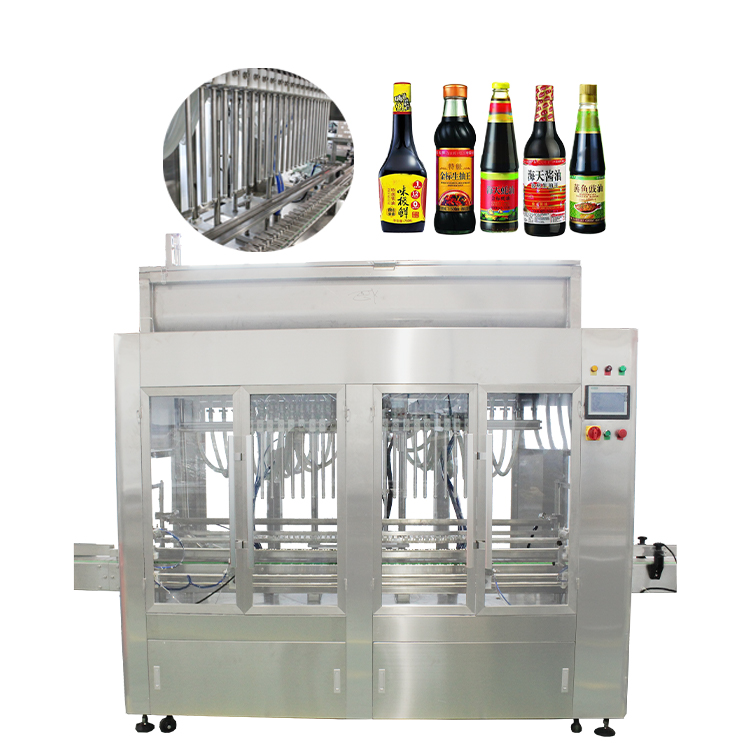
Standard features look great on paper. Implementation realities often tell a different story. Edge cases routinely cause standard machines to fail. Product behavior remains the ultimate variable in precision packaging. Foaming, stringing, and high-viscosity liquids demand specialized engineering.
The foaming dilemma ruins precision constantly. Agitating certain chemicals or liquid soaps creates excessive foam. Foam displaces liquid volume inside the bottle. It spills over the neck, causing inaccurate fills and a massive mess. Standard top-fill nozzles simply drop liquid in, maximizing aeration. You must use "bottom-up" pressure mechanisms for these products. The nozzle physically submerges into the container. It begins filling near the bottom. As the liquid level rises, the nozzle rises simultaneously, staying just beneath the surface. This technique prevents aeration. It stops foam formation completely, locking in exact volume displacement.
Post-fill dripping introduces another severe accuracy threat. Honey, syrups, and thick lotions tend to string or drip after the pump stops. A single rogue drop seems harmless. However, thousands of rogue drops cause minute volume discrepancies. They also contaminate the exterior of the container, which ruins label adhesion. Engineers combat this using specialized nozzle modifications.
Positive Shut-Off Nozzles: These feature an internal pin. The pin snaps down instantly to block the nozzle orifice the millisecond the fill ends.
Suck-Back Mechanisms: The pump briefly reverses direction after dispensing. It physically pulls the product back up into the nozzle, eliminating drips entirely.
Capillary Nozzles: Designed for thin liquids, they use surface tension to hold the liquid bead tightly inside the tip.
True precision rarely comes "off-the-shelf." A standard unit assumes standard fluid behavior. You need equipment tailored to your specific product parameters. A properly engineered Custom Filling Machine factors in exact specific gravity. It accounts for temperature volatility and fluid density. Customizing the fluid pathway, pump type, and nozzle geometry is the only way to guarantee long-term accuracy for difficult materials.
Accuracy is not isolated to the filling nozzle. Senior engineers evaluate the entire production line. A perfectly calibrated filler means nothing if the surrounding equipment behaves erratically. Whole-line synchronization dictates final accuracy.
Speed mismatch introduces severe risks. Imagine a bottle receiving a hyper-accurate liquid volume. It immediately moves down the conveyor toward the capping station. Abrupt conveyor stops cause a sudden jolt. Jerky transitions between conveyor belts create vibration. Misaligned downstream speeds cause bottlenecks. These physical disturbances cause the liquid to splash out of the unsealed bottle. Splashing instantly negates your highly accurate fill. You lose product, dirty the line, and package an underfilled container.
To solve this, modern facilities deploy a unified PLC architecture. Integrated controls eliminate isolated machine silos. The filling machine communicates seamlessly with bottle unscramblers upstream. It talks directly to cappers and labelers downstream. If the capper experiences a slight jam and slows down by 10%, the PLC slows the filler and unscrambler by precisely 10%. This maintains a fluid, continuous motion. It eliminates bottle crashing and product splashing.
Buyers must stop fixating on "maximum cycle speed." Sales brochures highlight maximum speeds to grab attention. However, pushing equipment to its absolute limit often destabilizes the line. True operational success comes from calculating optimal speed. Optimal speed is the exact pace where precision tolerances and machine synchronization align flawlessly. Running at an optimal, steady state yields higher viable output than running at maximum speed with frequent stops and spills.
Accuracy degrades over time. Wear and tear are inevitable. A reliable machine must remain easy to clean and maintain to stay precise. Neglecting maintenance slowly destroys the mechanical and digital calibrations you rely on.
Microscopic product build-up poses a severe threat. Sugary syrups, sticky resins, and thick pastes leave residue behind. Over time, this residue coats the internal walls of pumps. It cakes onto the lenses of ultrasonic and radar sensors. A coated sensor misreads the liquid level. A constricted pump dispenses less volume per stroke. This gradual skewing ruins volume readings silently.
You must address this through rigorous cleaning protocols. Modern Clean-In-Place (CIP) systems offer a massive advantage. Automated CIP features flush and sanitize the system completely. They run hot water, detergents, and sanitizers through the entire fluid pathway. You accomplish this without manual teardowns.
Eliminates Reassembly Errors: Operators do not need to remove gaskets, hoses, or clamps. Taking parts off and putting them back on often misaligns delicate mechanical tolerances.
Protects Calibration: Keeping the system assembled ensures sensors and pumps remain in their factory-calibrated positions.
Reduces Downtime: Automated flushing takes a fraction of the time compared to manual scrubbing.
Maintenance Actions for Sustained Precision | |||
Component | Risk Factor | Preventative Action | Frequency |
|---|---|---|---|
Sensors | Residue blinding the lens | Automated CIP flush / gentle wipe | Daily or per batch |
Servo Pumps | Internal wear altering volume | Lubrication and seal inspection | Monthly |
Nozzles | Drip-prevention failure | Inspect O-rings and shut-off pins | Weekly |
Automated changeovers further protect your baseline precision. Older machines required operators to manually tweak flow rates, fill times, and pump speeds. This manual tweaking leads to trial-and-error waste. Modern machines save product recipes digitally. Operators select a specific recipe from the interface. The machine adjusts its physical parameters instantly. This one-touch format switch eliminates human error. It guarantees the machine returns to the exact settings used during the last successful run.
True precision requires a comprehensive approach. It demands the correct mechanical foundation tailored to your fluid. It relies heavily on responsive sensor feedback for real-time micro-adjustments. You need tailored fluid handling to combat foaming and dripping. Finally, you must enforce whole-line synchronization to protect the product after dispensing.
Do not rely on equipment spec sheets alone. Spec sheets test machines under perfect, sterile conditions. Your production floor presents unique challenges. We strongly encourage buyers to request a real-world material trial. Send your specific product and container types to the vendor. Run them on their equipment. Validate their accuracy claims using your exact viscosity, temperature, and line speed requirements. This evidence-based validation is the only way to secure lasting precision.
A: Typically between 0.5% and 1% depending on the technology and fluid dynamics, but highly specialized machines can achieve tighter tolerances.
A: Temperature fluctuations change liquid density and viscosity; advanced systems use temperature-compensated flow meters to adjust volumes dynamically.
A: Volumetric dispenses an exact predetermined weight or volume, while level filling fills to a specific height in the container, regardless of minor variations in container interior volume.
A: While mechanical systems require periodic manual checks, modern sensor-driven machines perform continuous dynamic micro-calibrations during production.


