
T: +86-189-2891-8174
E: wechupack@yeah.net
E: wechupack@yeah.net
104 The Second Building, No.43 Haichong Road, Shiqi Town,Panyu District, Guangzhou City, China


Views: 0 Author: Site Editor Publish Time: 2026-08-14 Origin: Site


Product giveaway through overfilling quietly erodes profit margins in high-volume commercial sauce production. Conversely, underfilling triggers severe regulatory penalties and damages brand trust. Plant managers face a constant battle against fluctuating sauce characteristics. Temperature changes, varying viscosities, aeration, and suspended particulates render traditional volumetric filling methods highly inconsistent. When a hot sauce cools during a production run, its density changes. Volumetric machines dispense the same physical space, but the actual mass of the product shifts, leading to erratic fill weights and massive product waste.
Transitioning to intelligent net-weight filling systems represents a mandatory operational upgrade for modern facilities. Weight-based systems measure exact mass, ignoring density fluctuations entirely. This guide provides a definitive framework for evaluating, selecting, and specifying the exact equipment required to protect your margins, adapt to packaging trends, and maintain compliance.
Precision Yields Profit: Switching to a weight-based system eliminates the volumetric variances caused by temperature and viscosity shifts, directly reducing product giveaway.
Speed vs. Accuracy Balance: Modern weighing fillers utilize dual-stage filling (bulk and dribble feed) to maintain high throughput without sacrificing pinpoint accuracy.
Sanitation is Non-Negotiable: For sauces, equipment must feature stringent Clean-In-Place (CIP) capabilities and sanitary design to prevent microbial contamination.
Particulate Handling Dictates Valve Selection: The presence of seeds, vegetable chunks, or spices requires specialized anti-drip valves and positive displacement pumps integrated with the load cells.
Integration Defines Throughput: A standalone filler is insufficient; success depends on seamless synchronization with the upstream surge tanks and downstream sealing equipment.
Understanding the physics of sauce production highlights the limitations of volumetric filling. Sauces rarely maintain a uniform density from the start of a batch to the finish. Emulsions like mayonnaise incorporate air during the mixing phase. As the product sits in a holding tank, that aeration slowly dissipates, causing the product to become denser. Hot-filled products like marinara or BBQ sauce experience temperature drops as they travel through piping. As the temperature decreases, the sauce contracts and its density increases.
Volumetric machines fill by space. If the density changes, the actual weight of the product inside the bag changes. Net-weight filling relies on load cells to measure actual mass. A weighing bag filler machine cuts off the flow only when the exact target weight is reached, completely neutralizing the variables of temperature, aeration, and viscosity.
Feature | Volumetric Filling | Net-Weight Filling |
|---|---|---|
Measurement Basis | Physical space (milliliters, fluid ounces) | Actual mass (grams, kilograms) |
Impact of Temperature | High. Cooling shrinks volume, increasing mass per fill. | None. Mass remains constant regardless of temperature. |
Impact of Aeration | High. Trapped air displaces sauce, causing underfilling. | None. Load cells measure only the physical weight. |
Changeover Speed | Slow. Requires mechanical adjustments to pistons. | Fast. Software-driven recipe selection via HMI. |
Volumetric filling variances force operators to intentionally overfill bags to ensure no single unit falls below the legal minimum weight. Consider a facility filling 10kg bulk bags of cheese sauce. A standard volumetric filler might experience a ±50g variance due to density shifts. To guarantee compliance, the target fill weight must be set to 10.05kg. A precision net-weight system reduces that variance to ±2g. By dropping the target weight to 10.002kg, the plant saves 48g of sauce per bag.
Here is how that scales over a standard production quarter:
Identify the per-bag savings: 48 grams (0.048 kg).
Calculate weekly production: 5,000 bags per week.
Determine weekly savings: 5,000 bags × 0.048 kg = 240 kg of saved product per week.
Calculate quarterly savings: 240 kg × 13 weeks = 3,120 kg of saved product.
At commercial scale, this reduction in product giveaway often pays for the capital expenditure of the new equipment within the first year of operation.
Modern food manufacturing requires extreme flexibility. Facilities must pivot rapidly between retail eco-pouches, gallon-sized food service bags, and large industrial totes. Legacy equipment often requires mechanical changeovers, swapping out pistons or cylinders to accommodate different volumes. Intelligent net weighers execute these changeovers via software.
Operators simply select a new recipe on the Human-Machine Interface (HMI). The system automatically adjusts the target weight, tare parameters, and dual-stage flow rates. This software-driven flexibility allows manufacturers to capture new market demands and run diverse SKUs without purchasing separate, dedicated machines for every package size.
Weights and measures regulations demand strict adherence to stated label weights. Failing an audit results in heavy fines, product recalls, and forced downtime. Intelligent weighing systems provide verifiable, digital proof of compliance. Every single fill is recorded by the load cell and logged into the system memory.
This data provides immediate visibility into batch accuracy. If a nozzle begins to clog or a pump loses pressure, the system detects the slight delay in reaching the target weight and alerts operators before out-of-spec bags leave the facility. This continuous monitoring transforms compliance from a periodic manual check into an automated, foolproof process.
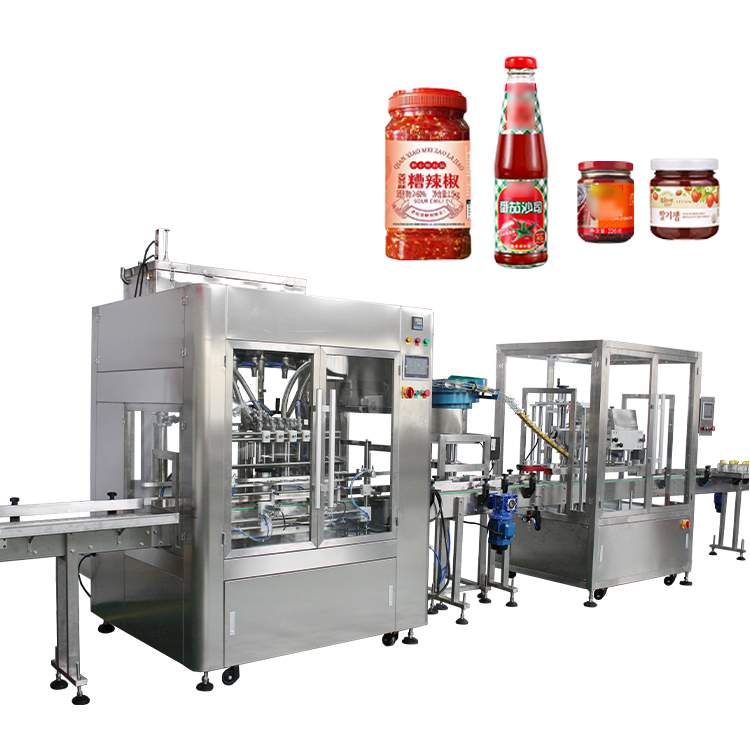
The load cell acts as the central nervous system of any sauce filling machine. You must specify the correct load cell sensitivity based on your primary bag sizes. A load cell calibrated for 1000kg industrial totes will not provide the necessary resolution for 500g retail pouches. Industrial environments also introduce heavy vibrations from nearby conveyors, mixers, and forklift traffic. High-end weighing controllers utilize dynamic digital filtering to isolate the true weight of the sauce from ambient plant vibration.
Auto-tare functionality is equally critical. During continuous production, small amounts of sauce may drip onto the bag holding mechanism or the bag itself might have slight manufacturing variations in weight. An intelligent auto-tare function zeroes out the scale immediately before the filling valve opens, ensuring the system measures only the net weight of the product entering the bag. Continuous self-calibration routines monitor for load cell drift, automatically adjusting parameters to maintain pinpoint accuracy across a multi-shift production run.
Selecting the correct feeding mechanism depends entirely on the flow characteristics of your product. Gravity-fed systems utilize an overhead tank and rely on atmospheric pressure to move the liquid. These systems work exceptionally well for highly fluid, free-flowing, and homogeneous liquids like soy sauce, vinegar, or thin broths. They require minimal maintenance and offer gentle product handling.
Thick emulsions, heavy pastes, and chunky sauces completely reject gravity feeding. These products require pump-driven systems to force the material through the piping and filling valves. Pump-driven systems provide the necessary pressure to maintain consistent flow rates, ensuring the load cells receive a steady stream of data. Choosing the wrong feed mechanism results in erratic flow, causing the weighing controller to overshoot or undershoot the target weight constantly.
Matching the pump type to the specific sauce rheology prevents product degradation. High-viscosity or shear-sensitive sauces like mayonnaise or salad dressings require gentle handling to prevent breaking the emulsion. Rotary lobe pumps or positive displacement gear pumps excel in these applications. For sauces containing heavy particulates, progressive cavity pumps provide smooth, non-pulsating flow without crushing the vegetable pieces.
Sauce Characteristic | Example Products | Recommended Pump Technology |
|---|---|---|
Thin, Free-Flowing | Soy sauce, clear broth, vinegar | Gravity feed or Centrifugal pump |
Thick, Shear-Sensitive | Mayonnaise, creamy salad dressing | Rotary Lobe pump |
Heavy Particulates | Chunky salsa, relish, marinara | Progressive Cavity pump |
High Viscosity Paste | Tomato paste, heavy mustard | Positive Displacement Gear pump |
Valve design directly impacts seal integrity. If a valve drips sauce onto the inner lip of the bag after the fill cycle completes, the downstream heat sealer will fail to create a hermetic seal, leading to spoilage. Diving nozzles plunge directly into the bag, filling from the bottom up to prevent foaming and splashing. Positive shut-off valves with anti-drip mechanisms cleanly cut the product stream the millisecond the load cell registers the target weight, keeping the seal zone pristine.
Historically, plant managers believed they had to choose between the speed of volumetric filling and the precision of weigh filling. Modern food packaging machinery eliminates this compromise through dual-stage filling technology. The filling valve features two distinct flow rates: bulk and dribble.
When the cycle initiates, the valve opens fully, executing a high-flow bulk feed that rapidly fills the bag to approximately 90% of the target weight. Once the load cell detects this threshold, the controller signals the valve to restrict the flow. The system transitions to a precision dribble feed, slowly dispensing the final few grams. This dual-stage approach allows the machine to achieve massive throughput while hitting the exact target weight with zero overshoot.
Sauce manufacturing environments face constant threats from microbial contamination. Equipment must adhere to strict hygienic standards, such as 3-A Sanitary Standards or EHEDG guidelines. Look for construction utilizing 316L stainless steel for all wetted parts. The design must feature crevice-free continuous welding and self-draining surfaces angled to prevent liquid pooling.
Manual teardown and cleaning consume massive amounts of labor and production time. The filling machine must integrate seamlessly with your plant's automated Clean-In-Place (CIP) and Sterilize-In-Place (SIP) systems. A standard automated CIP sequence includes:
Pre-rinse with ambient water to remove bulk sauce residue.
Caustic wash circulation at 80°C to break down fats and proteins.
Intermediate water rinse to flush out caustic chemicals.
Acid wash circulation to remove mineral scale and neutralize pH.
Final sanitizing rinse using high-temperature water or chemical sanitizers.
This requires specialized CIP-ready valves that can be flushed under high pressure without requiring manual disassembly. Proper sanitary design drastically reduces changeover times between different sauce flavors and guarantees food safety compliance.
Semi-automatic systems require an operator to manually present the bag to the filling nozzle, initiate the fill cycle, and remove the filled bag. These machines excel in lower-throughput environments or facilities that execute frequent flavor changeovers. They are the standard choice for institutional and foodservice packaging, such as 5-liter to 20-liter Bag-in-Box formats. The primary trade-off is the reliance on operator consistency to maintain overall line speed. However, they require significantly lower capital expenditure and offer unmatched flexibility for high-mix, low-volume production schedules.
High-speed retail packaging demands fully automated, continuous motion production. These systems automatically feed premade pouches or form bags directly from a roll of film, open them, weigh-fill the sauce, and seal them without human intervention. They are designed for massive throughput and continuous multi-shift operations. The trade-off involves higher maintenance complexity. Operating these systems requires skilled technicians to manage the complex synchronization between the web-handling mechanisms, the pump drives, and the weighing controllers.
Commercial ingredient supply operations require massive volume transfers into 200-liter drums or 1000-liter intermediate bulk containers (IBCs). These specialized weigh fillers feature heavy-duty load cells integrated directly into pallet scales or roller conveyors. They utilize oversized, high-flow dual-stage valves to move hundreds of gallons of highly viscous paste in minutes. Implementing these systems requires robust material handling integration to safely move the massive weights into and out of the filling station.
A weighing filler cannot operate accurately in isolation. It relies entirely on the consistency of the upstream sauce production line. The most common cause of erratic fill weights is fluctuating head pressure in the surge tank feeding the filler. If the surge tank runs nearly empty, the pump starves, causing cavitation and sputtering at the nozzle. If the tank is overfilled, the increased hydrostatic pressure forces product through the valve faster than the load cell controller anticipates. Plants must implement continuous level sensors and automated modulating valves on the surge tanks to maintain a constant head pressure, ensuring the filler receives a perfectly steady flow of product.
The moments immediately following the fill cycle are critical for package integrity. Heavy, hot bags of liquid are highly unstable. Improper handling causes the sauce to splash upward, contaminating the seal zone. Conveyor transitions must be perfectly smooth. Drop distances from the filling nozzle to the settling conveyor must be minimized. For highly viscous products, automated bag settling mechanisms gently vibrate or massage the bag to remove trapped air pockets before the bag enters the heat sealing station. Failure to control downstream handling results in blown seals, leaking boxes, and rejected pallets.
Modern weighing controllers function as powerful edge-computing devices. They should not operate as isolated data islands. Successful integration requires connecting the filler's PLC to the plant's central ERP or SCADA systems via industrial protocols like Ethernet/IP or Profinet. This integration enables real-time yield analysis. Plant managers can track exact product giveaway per shift, monitor pump performance trends, and establish complete batch traceability. If a specific batch of raw ingredients is recalled, the logged load cell data provides exact timestamps and weight records for every bag produced during that run.
Never accept a machine based on a water trial. Water has a specific gravity of 1.0 and a uniform viscosity. It behaves nothing like a chunky, hot, shear-sensitive sauce. A reputable industrial filling machine supplier will demand that you ship drums of your actual product to their facility for the Factory Acceptance Test (FAT). If shipping the actual product is impossible due to spoilage risks, they must formulate a precise rheological simulant that mimics the exact viscosity, particulate size, and flow characteristics of your sauce. The FAT must specifically test for calibration drift over extended runs, particulate damage through the pumps, and the effectiveness of the anti-drip valves under real-world pressures.
The true test of a bag filling machine manufacturer occurs after the equipment hits your floor. Unplanned downtime in a sauce plant destroys profitability. Define critical Service-Level Agreements (SLAs) before signing the purchase order. The machine must feature secure remote diagnostic capabilities, allowing the manufacturer's engineers to log into the PLC and troubleshoot logic faults or load cell calibration issues instantly. Verify the local availability of field service technicians and the guaranteed lead times for critical spare parts like specialized pump stators, custom valve seals, and replacement load cells.
The optimal weighing bag filler machine is dictated entirely by the specific rheology of your sauce, your required throughput, and the strictness of your plant hygiene standards. Transitioning from volumetric to net-weight filling eliminates the costly variables of temperature drops and density shifts, directly protecting your profit margins from product giveaway. When shortlisting equipment, prioritize load cell accuracy for high-value ingredients, demand specialized valve designs for chunky or stringy sauces, and match the automation level to your labor availability and volume requirements.
Execute the following steps to initiate your equipment upgrade:
Compile a comprehensive product specification sheet detailing the exact viscosity at fill temperature, maximum particulate size, and specific gravity for every sauce SKU.
Map out your available floor space, noting the locations of existing surge tanks, downstream conveyors, and CIP supply lines.
Calculate your current quarterly product giveaway using volumetric variances to establish a clear ROI baseline for the new equipment.
Request a detailed site audit and a custom product trial from a shortlisted supplier using your most difficult-to-handle sauce.
A: Intelligent net weighers typically achieve an accuracy of ±2g to ±5g on a 10kg fill. This precision relies on high-resolution load cells, continuous auto-tare functions to account for bag weight variations, and dynamic digital filtering to ignore ambient plant vibrations.
A: They utilize dual-stage filling technology. The valve opens fully for a high-speed bulk feed, rapidly filling the bag to roughly 90% of the target weight. The valve then partially closes for a precision dribble feed, slowly dispensing the final grams to hit the exact target without overshooting.
A: Yes, provided the machine is properly specified. Handling both requires interchangeable nozzles, variable speed pump drives, and software recipes that adjust the bulk/dribble flow rates. Thin liquids may bypass the pump entirely using gravity feed, while thick pastes require positive displacement pumps.
A: Integration relies on PLC handshakes and sensor networks. The filler communicates with upstream surge tanks to maintain constant head pressure via modulating valves. It also synchronizes with downstream conveyors to ensure smooth bag handoffs, preventing splashing before the heat sealing process.
A: Volumetric machines dispense a specific physical volume of space, which fluctuates wildly as sauce temperature, aeration, and density change. Weigh filling machines use load cells to measure the exact mass of the product, ignoring all density variables and ensuring consistent legal label weights.
A: Modern machines integrate with automated Clean-In-Place (CIP) systems. Operators connect CIP supply lines, and the machine flushes the pumps, piping, and valves with caustic solutions, water, and steam. Sanitary design with self-draining surfaces ensures no manual teardown is required, keeping changeovers under an hour.


