
T: +86-189-2891-8174
E: wechupack@yeah.net
E: wechupack@yeah.net
104 The Second Building, No.43 Haichong Road, Shiqi Town,Panyu District, Guangzhou City, China


Views: 0 Author: Site Editor Publish Time: 2026-07-01 Origin: Site


Packaging failures threaten modern manufacturing at every level. A single compromised container can ruin product batches. It also triggers expensive recalls. You cannot afford to leave your packaging integrity to chance.
Inadequate sealing methods lead to product spoilage and shipping leaks. They cause a severe loss of consumer trust. Regulatory compliance demands rigorous tamper-evident solutions. Manufacturers need reliable methods to protect end-users. You must ensure closures remain intact during transit and long-term storage.
Industry leaders rely on electromagnetic induction aluminum foil sealing. This technology creates hermetic barriers without applying direct heat. This guide provides an evaluation framework for commercial production lines. You will learn the core mechanics. We will explore liner dependencies. You will understand the calibration strategies necessary for commercial success.
Non-Contact Heating: Induction sealing relies on an electromagnetic field to heat the foil liner, ensuring the container and product remain unaffected.
Liner Dependency: Successful sealing requires a precise match between the polymer film on the foil and the container material (e.g., PET, HDPE, Glass).
Scalability: Equipment ranges from manual handheld units to high-speed, continuous inline systems, matching different production volumes.
Quality Control Variables: Achieving a hermetic seal requires balancing three factors: pressure (cap torque), heat (power setting), and time (conveyor speed).
To master this technology, we must first understand the underlying physics. The entire process relies on non-contact heating. It operates smoothly as containers travel through a specialized capping tunnel.
The sealing head creates an oscillating electromagnetic field.
This field safely penetrates the plastic cap.
The field induces eddy currents within the aluminum foil layer of the cap.
Electrical resistance in the foil generates instantaneous, localized heat.
This localized heat triggers a vital bonding process inside the cap. It rapidly melts the internal wax layer. The porous backing material absorbs this liquefied wax completely. Simultaneously, the heat melts the polymer seal layer located beneath the aluminum foil. Downward cap pressure forces this melted polymer against the container lip. The materials cool quickly as the bottle exits the electromagnetic field. They fuse perfectly.
This specific mechanism delivers an exceptional business outcome. It guarantees absolute tamper evidence. The fused polymer creates a robust hermetic barrier. It prevents oxygen and moisture ingress effectively. You protect product shelf life effortlessly. It blocks external contaminants from ruining your inventory. Consumers know immediately if someone has compromised the product.
A successful seal depends heavily on precise material chemistry. You cannot rely on high-quality machinery alone. The inner cap liner dictates your success. Most standard liners feature a precise four-layer structure.
Pulp or Foam Backing: This top layer rests against the inside of the cap. It provides necessary compressible downward pressure.
Wax Layer: This acts as a temporary adhesive. It holds the foil securely to the backing. It melts away completely during the heating phase.
Aluminum Foil: This conductive layer reacts to the electromagnetic field. It generates the required heat.
Polymer Heat Seal: This bottom film touches the bottle lip directly. It melts and bonds chemically to the container.
An advanced induction aluminum foil sealing machine fails completely if you choose the wrong liner chemistry. The polymer layer must match the bottle substrate exactly. If you process polyethylene (PE) bottles, you need a PE liner. Polyethylene terephthalate (PET) containers require PET-compatible liners. Glass containers present unique challenges. They typically require specialized universal liners for proper adhesion.
You must also choose between one-piece and two-piece liners. Two-piece liners leave the pulp backing inside the cap. This allows consumers to reseal the bottle easily after opening the foil. Manufacturers often deploy two-piece liners for pharmaceuticals or motor oil. One-piece liners bond entirely to the bottle. They leave no backing inside the cap. You typically see one-piece liners on peanut butter jars or beverage containers. Your choice depends entirely on consumer usage patterns.
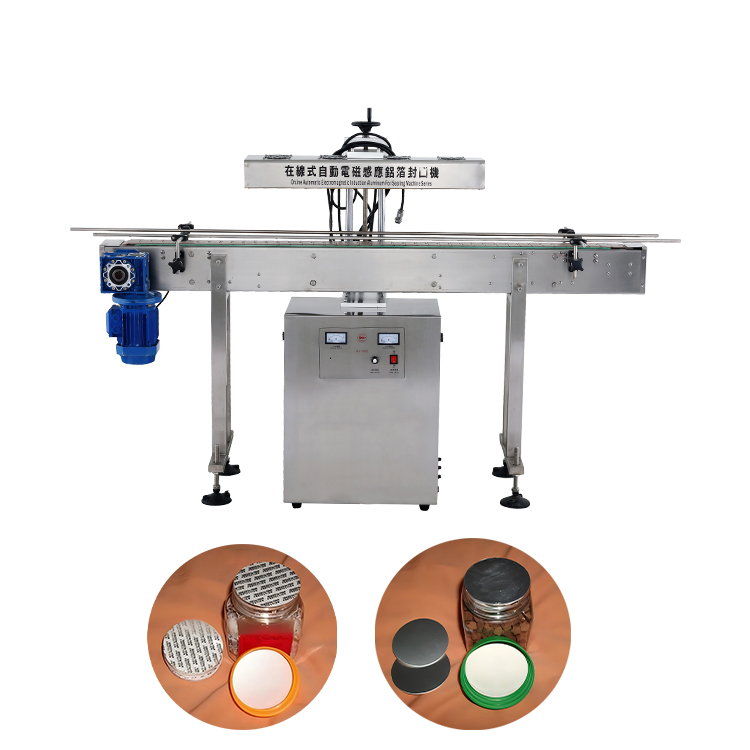
Production managers often evaluate different sealing technologies. You must compare non-contact induction against direct contact conduction sealing. This comparison aids solution shortlisting.
Feature | Induction Sealing | Conduction Heat Sealing |
|---|---|---|
Heating Method | Non-contact electromagnetic field | Direct contact via hot plate/head |
Speed & Throughput | High-speed, continuous inline flow | Slower, requires intermittent stops |
Application Constraints | Requires a threaded cap for downward pressure | Ideal for capless containers (e.g., yogurt cups) |
Energy Efficiency | High; heats only the foil layer | Lower; requires constant thermal maintenance |
The primary difference lies in the heating method. Induction uses a non-contact process. It generates heat internally within the foil. Conduction relies on direct contact. A heated platen physically presses against the sealing material. This fundamental difference impacts your entire production line design.
Speed and throughput strongly favor induction. Induction integrates seamlessly into continuous conveyor lines. Bottles move continuously under the sealing head. They never stop. Conduction often requires intermittent motion. The line must pause momentarily so the hot head can press down. This limits your total bottles per minute.
Application constraints usually dictate your final choice. Conduction works best for containers lacking threaded caps. You see this technology on yogurt cups or snack trays. These products use peel-off lids. Induction strictly requires the downward pressure of a tightened cap. If you package products inside capped bottles, you should always choose induction. It provides superior speed and consistency.
Selecting the right bottle foil sealing machine depends on your production environment. Equipment categories scale directly to your operational volume. You must match the hardware to your facility capabilities.
Manual handheld sealers work perfectly for research and development. Low-volume startups use them frequently. You can also utilize them for offline rework. However, handheld units carry strict limitations. Operators apply inconsistent pressure. They also struggle to time the heating cycle perfectly. This inconsistency leads to occasional seal failures.
Semi-automatic tabletop systems handle moderate volumes better. These units remove operator timing errors completely. A built-in timer controls the electromagnetic burst precisely. Yet, operators must still place each bottle manually under the head. This manual handling restricts your overall throughput. It works well for batch processing.
Inline continuous systems represent the industry standard for automated facilities. They install easily over existing conveyor belts. You can choose between air-cooled and water-cooled variants. Air-cooled systems dominate modern packaging lines. They require much lower maintenance. They consume less energy. Water-cooled systems handle extreme environments. You need water cooling for heavy-duty, high-speed applications running massive cap sizes.
Rigorous evaluation criteria must guide your final purchase. You should match the machine directly to your maximum conveyor speed. Verify the acceptable cap size ranges. Ensure the sealing head integrates properly after your existing capping machine. Proper alignment guarantees consistent results.
Deploying this technology requires careful calibration. You must manage the operating window strictly. We call this the "Iron Triangle" of induction. It guarantees leak-proof bottle sealing.
First, you must control torque. The cap must compress the liner firmly against the bottle lip. Over-torquing strips the plastic threads. It damages the liner irreversibly. Under-torquing results in a weak, leaky bond. The polymer cannot fuse without adequate pressure.
Second, you must balance power and heat settings. A power setting too high scorches the aluminum foil. It melts the plastic cap entirely. A setting too low fails to melt the polymer layer properly. The foil remains unattached.
Third, you must monitor time. Line speed dictates how long the bottle stays inside the electromagnetic field. You must calibrate conveyor speed directly to the machine power setting. If you increase the conveyor speed, you must increase the power proportionally.
Operators face common troubleshooting risks daily. Uneven bottle lips prevent uniform pressure distribution. Liquid spillage on the rim ruins the chemical bond instantly. Caps lacking sufficient thread engagement pop off during the heating phase. You must inspect incoming bottles for structural defects.
Robust quality assurance protocols catch these errors early. You should implement vacuum leak testing on random production samples. Destructive peel tests verify uniform seal integrity visually. A perfect seal leaves a consistent ring of polymer on the bottle lip. A scorched seal shows dark discoloration. Consistent testing maintains high production standards.
Successful induction sealing demands a perfect synergy of variables. You need the right machine architecture. You must select the correct liner chemistry. You must maintain precise line calibration. These elements work together to protect your product integrity.
Buyers should finalize their shortlisting logic before contacting vendors. Map your container material accurately. Document your exact cap size ranges. Determine your target bottles-per-minute (BPM) requirements. This data streamlinesthe procurement process significantly.
Take immediate action by requesting custom sample testing. Send your actual bottles, caps, and product to equipment manufacturers. Let them verify material compatibility in their test labs. This step removes all guesswork from your investment.
A: Yes, but it requires extreme caution. The electromagnetic field heats the metal container alongside the foil. This can cause severe burns or product damage. You typically need specialized cap designs or alternative sealing methods for metal packaging.
A: No. The heat generates instantaneously and remains highly localized within the foil layer. The process takes only a fraction of a second. The surrounding product remains completely unaffected by the temperature change.
A: Standard induction machines require a threaded cap to apply necessary downward pressure. However, specialized capless induction sealers exist. They use mechanical pressing belts to hold the foil against the container during the heating phase.


