
T: +86-189-2891-8174
E: wechupack@yeah.net
E: wechupack@yeah.net
104 The Second Building, No.43 Haichong Road, Shiqi Town,Panyu District, Guangzhou City, China


Views: 0 Author: Site Editor Publish Time: 2026-08-07 Origin: Site


Honey’s unique rheological properties—specifically its high, temperature-dependent viscosity and susceptibility to crystallization—present distinct engineering challenges for industrial-scale packaging. Standard packaging equipment often fails to maintain the sterile environment required to prevent osmophilic yeast fermentation, or lacks the thermal management necessary to keep honey flowing without degrading its enzymatic profile. Selecting inadequate machinery results in compromised shelf life, frequent downtime, and product loss.
Transitioning from semi-automatic bottling setups to a specialized aseptic bag filling machine requires a rigorous evaluation of thermal controls, sterilization protocols, and system integration. This guide provides a technical framework for assessing equipment specifications, evaluating suppliers, and mitigating implementation risks.
Viscosity and Thermal Management: Effective honey processing equipment must feature precise PID temperature controls to maintain flowability without exceeding critical degradation thresholds (typically 40–45°C).
Sterilization Integrity: True aseptic filling requires robust CIP (Clean-in-Place) and SIP (Sterilize-in-Place) capabilities, utilizing steam pre-sterilization and secure bag-connection mechanisms to eliminate contamination risks.
Scalability and Line Integration: Equipment must align with current throughput needs (e.g., single-head vs. multi-head) while integrating seamlessly into the broader food filling production line, accommodating bag sizes from 5L to 200L or 1000L IBCs.
Supplier Due Diligence: Selecting an aseptic bag filling machine supplier requires evaluating their Factory Acceptance Testing (FAT) protocols, post-installation support, and expertise in high-viscosity applications.
Commercial honey packaging demands strict adherence to baseline success criteria. The primary objective is preventing crystallization and fermentation during bulk storage and global transit. Honey naturally contains osmophilic yeasts. If moisture levels fluctuate or external contaminants enter the product stream, these yeasts trigger fermentation, souring the entire batch. Aseptic packaging eliminates this risk by creating an impenetrable sterile barrier between the product and the external environment.
Honey exhibits a severe inverse relationship between viscosity and temperature. As the temperature drops, viscosity spikes exponentially, creating immense backpressure within piping systems. This physical reality dictates your required pump strength, motor sizing, and piping diameter. Pumping cold honey overworks motors and causes pump cavitation, while overheating destroys beneficial enzymes like diastase and invertase. You must balance thermal input with flow rate to maintain steady production without damaging the raw product.
Temperature (°C) | Approximate Viscosity (Centipoise) | Flow Characteristic |
|---|---|---|
10°C | 10,000+ cP | Solidified / Non-pumpable |
20°C | 3,000 cP | Thick / High pump strain |
30°C | 1,000 cP | Manageable / Moderate flow |
40°C | 300 cP | Optimal / Fast flow |
You must differentiate between a standard liquid filling machine and a true aseptic system. Standard fillers operate in ambient air, exposing the product to airborne pathogens and moisture. Aseptic systems sterilize the packaging material, maintain a sterile filling chamber using high-pressure steam, and hermetically seal the container before it leaves the sterile zone. Aseptic bag-in-box (BIB) or bulk bag formats are mandatory for bulk export. They provide extended shelf life without subjecting the honey to extreme, quality-degrading pasteurization.
Establishing the operational boundary between bulk aseptic processing and retail packaging clarifies equipment needs. Multi-lane sachet packing machines serve direct-to-consumer retail demands, handling small, immediate-use portions. Conversely, aseptic bag fillers are engineered for commercial wholesale preservation and high-volume stability. They handle massive quantities designed for long-term storage, transport, and eventual repackaging or industrial food formulation.
Evaluating a honey filling machine requires analyzing specific engineering dimensions. Focus on how the machine handles high-viscosity, temperature-sensitive fluids in a sterile environment.
Hygiene protocols form the foundation of aseptic packaging. You must evaluate the steam pre-sterilization requirements for the filling head and product lines. The system must reach and hold specific temperatures (typically 121°C) for a defined duration to achieve a verifiable log reduction in microbial load.
Assess the integration of automated Clean-in-Place (CIP) and Sterilize-in-Place (SIP) systems. Automated systems minimize manual intervention, drastically reducing human error. The machine should automatically sequence through pre-rinses, caustic washes, acid washes, and final steam sterilization without requiring operators to dismantle heavy piping.
Review the aseptic transfer mechanisms. Consider the use of single-use aseptic transfer lines and sterile connectors. These components eliminate cross-contamination risks when switching between distinct honey varietals, such as moving from a robust buckwheat honey to a delicate clover honey.
Accuracy directly impacts profitability. When dealing with high-viscosity fluids, you must compare mass flow meters against load cell (weight-based) dosing systems. Mass flow meters often struggle with honey due to pressure drops and potential aeration within the viscous fluid. Load cells provide superior accuracy by measuring the exact physical weight of the dispensed product, regardless of temperature or density fluctuations.
To ensure maximum accuracy, the load cell dosing system requires a strict calibration sequence during commissioning:
Isolate the load cell platform from all mechanical vibration and conveyor movement.
Perform a zero-tare sequence with an empty, sterilized bag locked into the filling jaws.
Execute a static calibration using certified test weights to verify the sensor's linearity.
Run a dynamic flow test with actual honey to calculate the "in-flight" material offset.
Adjust the PLC pre-act parameters so the shut-off valve closes exactly before the target weight is reached.
Thermal management is non-negotiable. Evaluate the necessity of jacketed piping and hoppers. Jacketed systems circulate warm water around the product pathways, maintaining a consistent temperature profile from the holding tank to the filling nozzle. Uninsulated lines allow honey to cool, crystallize, and eventually block the system.
Assess the PLC-integrated PID temperature controlling systems. Proportional-Integral-Derivative (PID) controllers constantly monitor and adjust the heating elements to prevent temperature overshoots. This ensures consistent product flow without causing localized overheating, which leads to elevated Hydroxymethylfurfural (HMF) levels and enzymatic degradation.
The physical handling of the aseptic bag dictates the integrity of the final seal. Analyze the filling bag's design form, its hanging position, and the specific connection method with the front-end receiving bag. The machine must grip the bag spout securely, remove the cap within a sterile chamber, fill the bag, and recap it before exposing it to ambient air.
Evaluate anti-drip nozzle designs. These nozzles are specifically engineered to cleanly cut off highly viscous honey streams. A trailing string of honey can compromise the sterile zone, contaminate the bag exterior, and interfere with the final cap seal. Positive shut-off valves with mechanical suck-back features are highly recommended for this application.
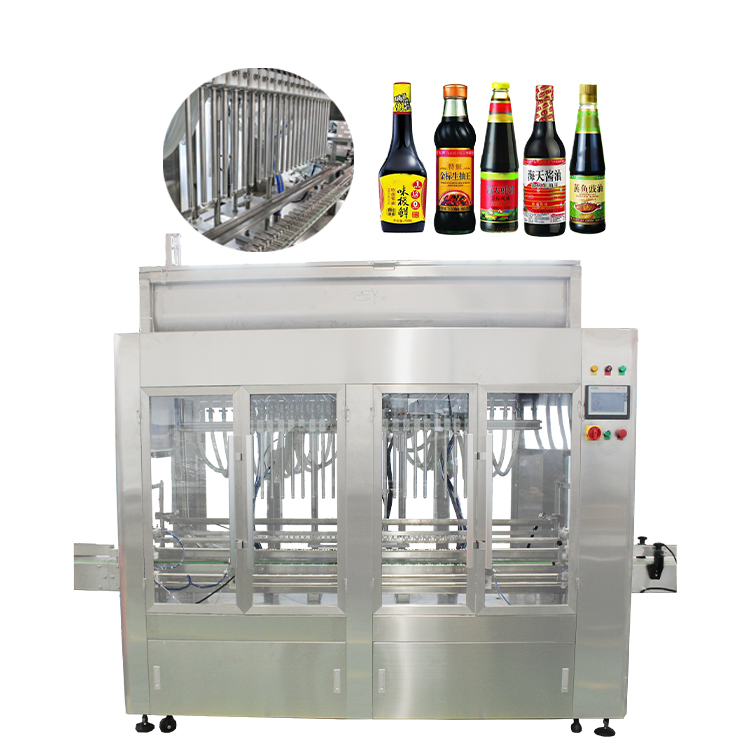
Matching machine capacity to your facility's output prevents operational bottlenecks. You must calculate true throughput based on real-world cycle times, not just maximum pump speeds.
Determine your facility's primary operational focus. If your goal is high-speed continuous output for a single product line, dedicated multi-head rotary systems offer the highest efficiency. If your facility requires format flexibility to handle various bag sizes and frequent product changeovers, modular inline systems provide the necessary adaptability.
Map your production goals directly to machine capabilities. Single-head configurations are ideal for moderate batches, specialty honeys, and pilot plants. They offer simplicity and easier maintenance. Multi-head systems are essential for high-volume, continuous operations where downtime severely impacts the bottom line.
Ensure the machine can handle your required range of aseptic bags without requiring extensive mechanical changeovers. A versatile machine should easily transition between 5L to 25L bag-in-box formats, 200L drums, and 1000L Intermediate Bulk Containers (IBCs). Quick-change tooling and adjustable bag supports are critical features for minimizing changeover times.
Packaging Format | Typical Volume | Expected Cycle Time (Single Head) |
|---|---|---|
Bag-in-Box (Small) | 5L - 10L | 4 to 6 bags per minute |
Bag-in-Box (Large) | 20L - 25L | 2 to 3 bags per minute |
Bulk Drum | 200L | 10 to 15 drums per hour |
IBC Tote | 1000L | 2 to 4 totes per hour |
Calculate the true throughput by factoring in every step of the process. Do not rely solely on the volumetric fill rate. You must account for bag loading, decapping, steam sterilization of the spout, the actual filling phase, nitrogen flushing, recapping, and ejection times. A machine with a fast pump but a slow sterilization cycle will ultimately bottleneck your production.
An aseptic filler does not operate in isolation. It must function as a synchronized component within your broader food filling production line.
Detail the necessary connections between the filling machine and upstream honey processing equipment. The filler must communicate with filtration units, homogenizers, and pasteurizers or holding tanks. If the holding tank runs low, the filler must automatically pause. If the filler experiences a fault, it must signal the upstream pumps to stop sending product, preventing dangerous pressure buildups in the lines.
Evaluate the transition from the filling station to downstream operations. Once the aseptic bag is filled and sealed, it must move efficiently to boxing, sealing, and palletizing systems. Conveyor speeds must synchronize to ensure bottleneck-free operation. For bag-in-box applications, the automated case erector and sealer must keep pace with the filler's output.
Assess SCADA (Supervisory Control and Data Acquisition) compatibility. The machine's PLC must communicate with central plant management systems via industrial protocols like Ethernet/IP or Modbus TCP. This integration provides critical data for traceability, batch reporting, and automated quality control. Operators should be able to monitor fill weights, sterilization temperatures, and fault codes from a centralized control room.
Partnering with the right manufacturer is just as important as selecting the right hardware. You must evaluate potential vendors based on their specific engineering expertise and their ability to support your facility long after the initial installation.
Evaluate the supplier's specific track record with honey and high-viscosity syrups. General beverage or low-viscosity liquid experience does not translate well to honey processing. An experienced aseptic bag filling machine supplier understands the nuances of pump cavitation, shear stress on enzymes, and the precise thermal management required to prevent crystallization.
Require comprehensive Factory Acceptance Testing (FAT) and Site Acceptance Testing (SAT). These tests must utilize actual product or a rheologically identical substitute. Running water through the machine during a FAT proves nothing about how it will handle cold, viscous honey. Demand rigorous testing of the CIP/SIP cycles, fill accuracy at maximum speed, and the integrity of the aseptic seals.
Assess the availability of local technical support and spare parts inventory. High-viscosity processing places significant wear on pump stators, seals, and valves. Guaranteed response times and overnight parts availability are critical to minimizing costly production halts. Review the supplier's Service Level Agreements to ensure they can meet your facility's uptime requirements.
Deploying new aseptic technology introduces operational risks. Identifying these risks early allows you to implement robust mitigation strategies, ensuring a smooth transition to commercial production.
Compromised aseptic seals lead to immediate product spoilage and severe brand damage. Failures typically stem from improper bag alignment, inadequate steam sterilization temperatures, or honey dripping onto the sealing surface. Mitigate these risks through automated sensor verification. Implement vision systems or pressure sensors that verify cap placement and seal integrity, automatically rejecting any bag that fails the parameters.
Unexpected downtime creates severe temperature fluctuation risks. If the line stops, honey sitting in uninsulated piping will cool and crystallize, effectively turning into a solid block. Mitigate this by ensuring all product pathways, from the holding tank to the final filling nozzle, are fully water-jacketed and insulated. Implement automated recirculation loops that keep the honey moving and heated during minor line stoppages.
Transitioning from basic bottling equipment to advanced aseptic systems represents a significant leap in complexity. Operators must understand sterile boundaries, steam pressure management, and complex PLC interfaces. Mitigate operator error through rigorous, supplier-led training programs. Develop strict Standard Operating Procedures (SOPs) that detail every step of the CIP/SIP process, startup routines, and fault recovery protocols.
Audit your current facility layout to determine available footprint and utility connections for high-pressure steam and chilled water.
Compile a detailed rheological profile of your specific honey blends, including maximum viscosity at minimum ambient temperatures.
Draft a Request for Proposal (RFP) specifying load-cell dosing, jacketed piping, and automated CIP/SIP capabilities.
Schedule a Factory Acceptance Test (FAT) using your actual product to verify fill accuracy and anti-drip valve performance.
A: A standard machine fills containers in an ambient environment, exposing the product to airborne contaminants. An aseptic machine sterilizes the packaging, maintains a sterile filling zone using steam or sterilants, and hermetically seals the product. This prevents microbial contamination and extends shelf life without relying on chemical preservatives or excessive heat treatment.
A: Commercial aseptic systems are highly versatile. Modular inline machines typically accommodate bag-in-box sizes ranging from 5L to 25L. With adjustable tooling, these same machines can often scale up to handle bulk packaging formats, including 200L drums and 1000L Intermediate Bulk Containers (IBCs).
A: They utilize PLC-controlled PID temperature systems connected to water-jacketed hoppers, piping, and filling valves. Warm water circulates through these jackets, maintaining the honey at an optimal flow temperature (usually 40–45°C). This precise control prevents crystallization while protecting delicate enzymes from heat degradation.
A: For high-viscosity products like honey, load cells (weight-based filling) are generally preferred. Mass flow meters can lose accuracy due to pressure drops and aeration within thick fluids. Load cells measure the exact physical weight of the dispensed product, ensuring high accuracy and preventing costly product giveaway.
A: Prioritize suppliers with documented engineering experience in high-viscosity food applications. Look for vendors who offer robust FAT/SAT testing protocols using actual product, provide transparent performance data, and guarantee reliable post-installation technical support and local spare parts availability.
A: Clean-in-Place (CIP) automatically flushes the system with heated water, caustic, and acid solutions to remove all residual honey and organic matter. Following this, Sterilize-in-Place (SIP) introduces high-pressure steam (typically at 121°C) throughout the product pathways and filling valves to eliminate all microbial life before production begins.


