
T: +86-189-2891-8174
E: wechupack@yeah.net
E: wechupack@yeah.net
104 The Second Building, No.43 Haichong Road, Shiqi Town,Panyu District, Guangzhou City, China


Views: 0 Author: Site Editor Publish Time: 2025-12-26 Origin: Site


Unexpected shutdowns or loose caps often signal hidden issues inside a Capping Machine during daily production.These problems reduce efficiency, increase waste, and create quality risks if operators cannot respond correctly.In this article, you will learn practical methods to troubleshoot common capping machine problems step by step.
Before adjusting parameters or replacing parts, it is essential to clearly identify the type of problem a Capping Machine is experiencing. Many failures appear similar on the surface, yet their root causes differ significantly. Misdiagnosis often leads to repeated adjustments without long-term improvement.
Loose caps are among the most frequent complaints in capping operations. They often lead to leakage during transportation or storage, directly affecting product safety and brand reputation. Although insufficient torque is the most obvious explanation, under-torqued caps are often the result of multiple interacting factors.
Inconsistent bottle height can reduce effective contact time between the capping head and the cap. Slippage between the chuck and the cap may prevent full torque transmission. In addition, bottle rotation during tightening can absorb torque that should be applied to the cap. These issues are especially common in lightweight plastic containers and high-speed production lines.
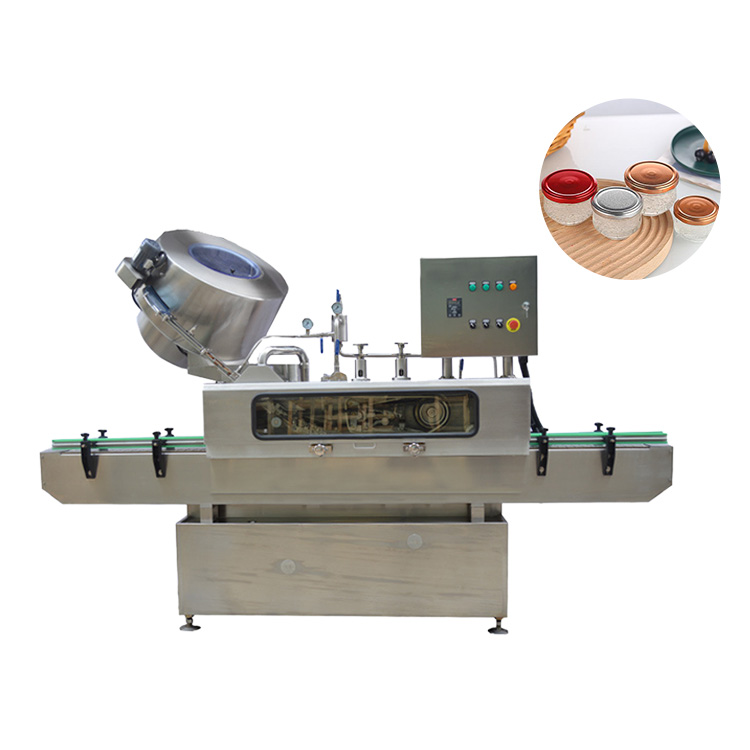
Excessive torque can crack caps, deform liners, or stress bottle necks. While over-tightening may seem safer than loose caps, it increases rejection rates and may cause delayed failures after distribution. In most cases, this problem relates to incorrect torque settings or worn torque control components.
Excessive torque can crack caps, deform liners, or overstress bottle necks. While over-tightening may seem safer than loose caps, it often creates delayed failures that appear only after distribution. Customers may experience difficulty opening products, or containers may fail due to stress relaxation over time.
Over-tightening is usually caused by incorrect torque settings, worn torque control components, or compensation attempts for unrelated defects. In some cases, operators increase torque to solve leakage problems without realizing that the true cause lies elsewhere, such as cap misalignment or bottle instability.
Unexpected stops and fluctuating output rates usually signal mechanical resistance or synchronization errors. These problems may stem from debris accumulation, misaligned guide rails, or timing mismatches between conveyors and the capping head.
Annotation: Treat symptoms as indicators, not conclusions, because most capping failures share overlapping surface signs.
Problem Type | Typical Symptoms | Likely Root Causes | Potential Impact |
Loose or under-torqued caps | Cap leakage, easy cap removal | Low torque setting, bottle rotation, chuck slippage | Product leakage, customer complaints |
Over-tightened caps | Cracked caps, deformed liners | Excessive torque, worn torque control parts | High rejection rate, delayed failures |
Cross-threaded caps | Crooked caps, visible misalignment | Poor cap orientation, unstable bottle positioning | Seal failure, poor appearance |
Machine jams | Sudden stops, blocked caps or bottles | Debris buildup, misaligned guides | Downtime, reduced throughput |
Inconsistent output | Fluctuating line speed | Synchronization errors, mechanical resistance | Unstable production efficiency |
A systematic troubleshooting approach improves accuracy and reduces unnecessary adjustments. Instead of reacting to each defect independently, operators should follow a consistent diagnostic sequence.
Before touching the machine, verify that caps and containers match the intended specifications. Even small variations in neck finish, thread pitch, or liner material can disrupt capping performance. A Capping Machine cannot compensate for incompatible components.
Torque settings must align with product requirements and cap material properties. Electronic torque controllers, magnetic clutches, or mechanical springs should be inspected for calibration drift. Changes in ambient temperature may also affect torque consistency.
Mechanical wear directly affects torque transfer and alignment accuracy. Worn chucks, belts, spindles, or bearings reduce friction and stability during tightening.
Misalignment between the bottle axis and the capping head leads to uneven force distribution, increasing the risk of both loose and damaged caps. Visual inspection combined with manual rotation tests can quickly reveal abnormal resistance, wobble, or irregular motion.
Running the Capping Machine at reduced speed allows operators to observe dynamic behaviors that are invisible at full production speed. Bottle wobble, delayed cap pickup, uneven spindle engagement, or inconsistent vertical pressure often become obvious during slow operation.
Dynamic observation is essential because many capping issues only occur during motion and cannot be detected through static inspection alone.
Cap feeding issues are a common upstream cause of capping defects. Even a perfectly adjusted capping head cannot perform correctly if caps arrive in the wrong orientation or at inconsistent timing.
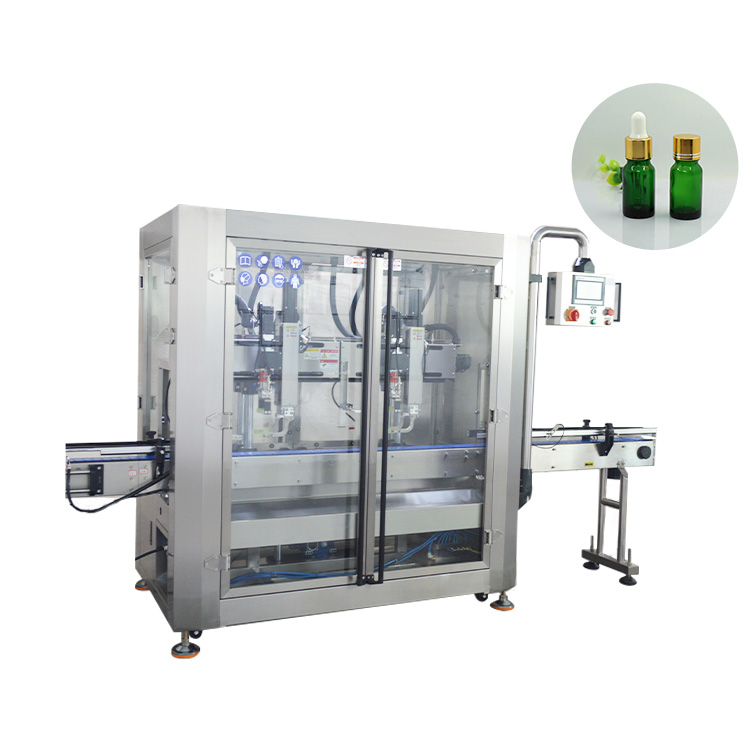
Vibratory feeder bowls depend on precise vibration frequency, amplitude, and track geometry. Caps flipping, jamming, or feeding inconsistently often indicate incorrect vibration settings or worn track surfaces.
Dust, oil residues, and cap debris reduce friction predictability and feeding stability. Regular cleaning and surface inspection significantly improve feeder reliability.
Caps may tilt, rotate, or bounce during transfer from the feeder to the capping station. Narrow chutes, uneven spacing, or static electricity buildup often contribute to these problems.
Smooth, clean, and properly angled transfer paths reduce cap disturbance and improve orientation consistency.
Timing mismatches between cap release and bottle arrival cause missed caps, double feeding, or misplacement. Synchronization depends on sensor accuracy, PLC logic, and conveyor speed stability.
Even small timing offsets can produce recurring defects, especially at higher line speeds.
Lightweight plastic caps behave differently than metal closures. They respond more strongly to airflow and static electricity. Adjusting feeder settings when switching cap materials is essential for stable performance.
Annotation: Cap feeding stability often determines overall capping efficiency more than the capping head itself.
Torque inconsistency is one of the most challenging issues because it may not appear immediately in visual inspections. However, it directly affects sealing performance and compliance.
In multi-head systems, torque variation often occurs between individual spindles. Comparing output from each head helps determine whether the issue is systemic or localized.
Uneven wear, contamination, or mechanical damage on a single spindle frequently explains inconsistent results.
Belts, gears, clutches, and couplings transfer torque from the motor to the cap. Slippage, fatigue, or misalignment reduces effective torque.
Routine inspection and timely replacement of these components are essential for long-term torque stability.
Inspection Area | What to Check | Common Findings | Recommended Action |
Individual spindles | Torque output variation | Uneven wear between heads | Repair or replace affected spindle |
Torque transmission | Belts, gears, clutches | Slippage or fatigue | Tighten, realign, or replace components |
Control system | Torque settings and signals | Calibration drift | Recalibrate torque controller |
Environment | Temperature and humidity | Seasonal torque variation | Adjust torque parameters |
Verification method | External torque measurement | Deviation from target torque | Validate with handheld torque tester |
Humidity and temperature affect liner compression and friction coefficients. Seasonal changes may require torque adjustments even when the Capping Machine itself remains unchanged.
Ignoring environmental effects often leads to unexplained torque drift over time.
Handheld torque testers provide objective verification. Relying solely on machine settings without measurement increases the risk of undetected deviations.
Stable bottle handling is essential for accurate capping. Even minor instability compromises alignment and torque transfer.
Guide rails must center bottles consistently without excessive pressure. Star wheels should match bottle diameter and shape. Poor matching increases vibration during capping.
Excessive back pressure causes bottles to tilt or rotate unpredictably. Balanced conveyor speeds ensure smooth bottle flow into the Capping Machine.
Bottle deformation, height variation, or oval necks introduce instability. Quality variation upstream often appears as capping failure downstream.
Annotation: Many capping problems originate from container handling rather than the capping unit itself.
While troubleshooting focuses on solving current issues, preventive maintenance reduces their frequency and severity. A proactive strategy transforms troubleshooting into continuous improvement.
Daily, weekly, and monthly inspections should cover torque systems, feeding components, and alignment points. Documented routines improve accountability and consistency.
Frequent format changes increase error risk. Standardized checklists help operators reset the Capping Machine accurately after each changeover.
Well-trained operators recognize abnormal sounds, vibrations, and visual cues early. Early intervention prevents minor deviations from escalating into major failures.
Tracking downtime causes and defect rates reveals hidden trends. Data-driven maintenance decisions outperform reactive fixes.
This article explained how to troubleshoot common issues of a Capping Machine in daily production, focusing on torque errors, cap damage, alignment faults, and control system problems. It showed how operators can identify root causes through structured checks, proper setup, and routine maintenance practices.
By applying these methods, manufacturers can reduce downtime, improve sealing consistency, and protect packaging quality. Guangzhou Tengzhuo Packing Equipment Co., Ltd. provides reliable capping machines designed for stable performance, flexible adjustment, and professional technical support, helping businesses maintain efficient and dependable packaging operations.
A: The first step is stopping the Capping Machine and checking power, sensors, and cap feeding alignment.
A: A Capping Machine often causes loose caps due to incorrect torque settings or worn capping heads.
A: Regular cleaning and proper cap size matching help a Capping Machine avoid repeated jamming issues.
A: Yes, a modern Capping Machine improves stability, reduces failures, and lowers overall maintenance expenses.


